
Weak Things · The Dead Sea Scrolls · Qumran, 1947 to 1956
Eleven caves, 981 scrolls.
Late in 1946 or early in 1947, a shepherd climbed into a cave above the Dead Sea and found jars full of scrolls. In ten years, eleven caves gave up the oldest Bible manuscripts ever found, a thousand years older than any copy before them. Here they are by the numbers, with the whole Great Isaiah Scroll to unroll and read, and the places Nephi, Abinadi and the Savior quoted it.
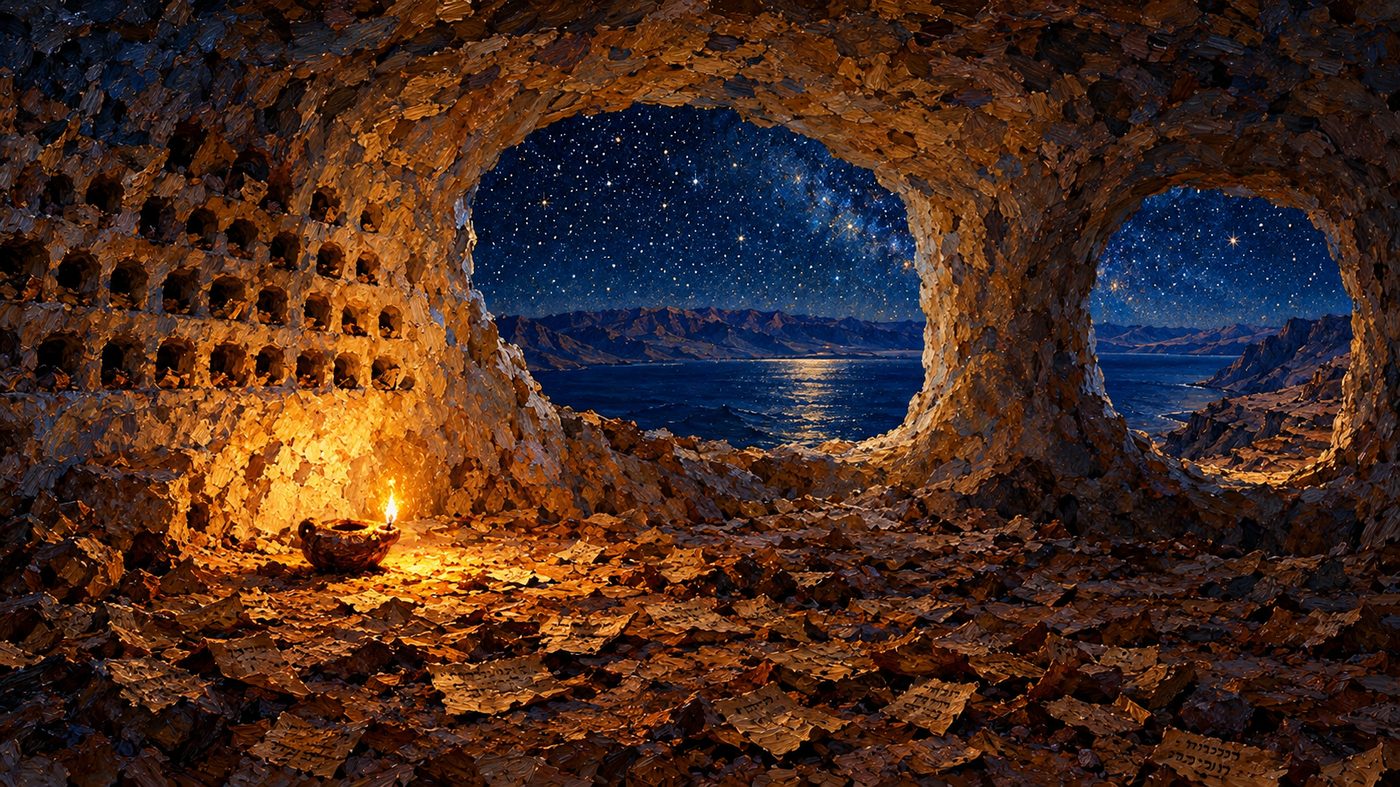
Counts depend on who is counting and how; see Why the numbers disagree. Paintings are labeled as paintings; every photograph is of the real scrolls and caves. Sources are listed in How we counted.
Chapter 1 · 1946 to 1956
A stone, a cave, seven scrolls
The story starts with Bedouin shepherds of the Ta‘amireh tribe and ends, ten years later, with the last scroll cave. In between came a bidding war, a Wall Street Journal ad and a $250,000 purchase.
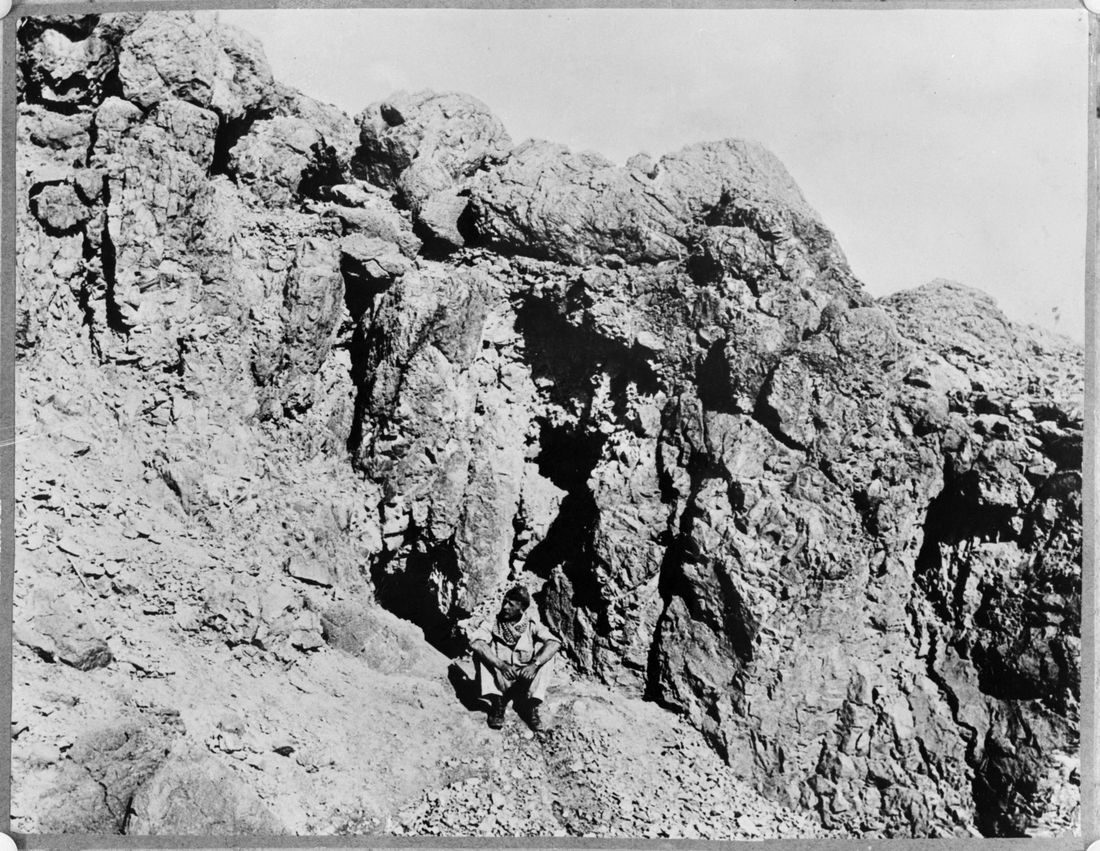
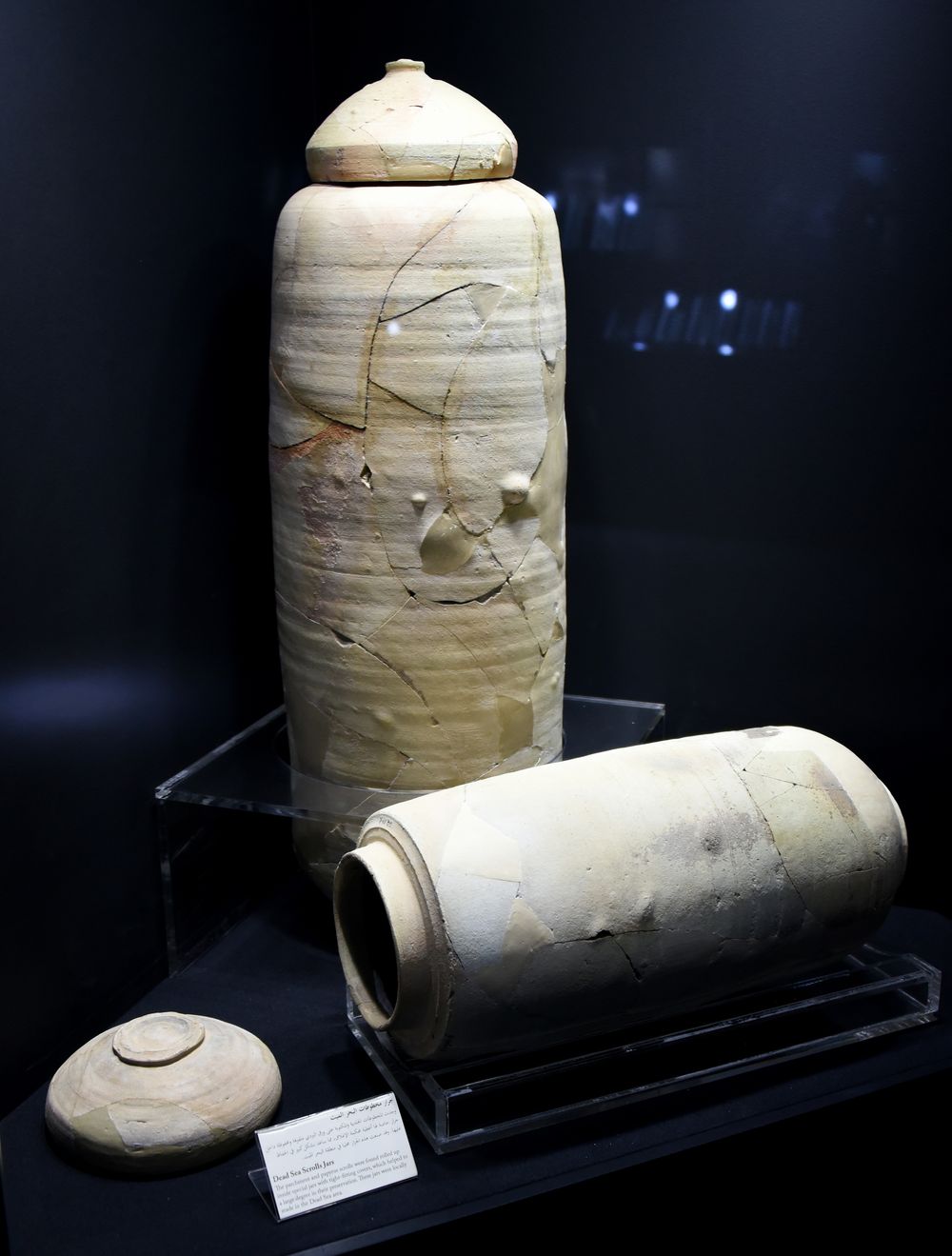
Between November 1946 and February 1947, Muhammed edh-Dhib, his cousin Jum‘a Muhammed and Khalil Musa found a cave in the cliffs near Qumran (Wikipedia). Inside were tall jars. Some held scrolls wrapped in linen.
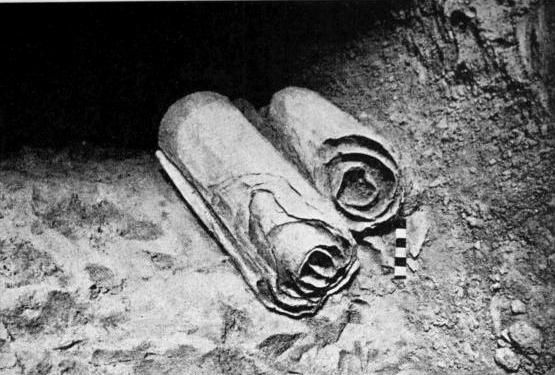
Seven scrolls came out of that first cave. Three were sold to a dealer for seven Jordanian pounds, about $28. Four, including the Great Isaiah Scroll, went to the Syrian Orthodox Metropolitan Mar Samuel, and three others reached Professor Eleazar Sukenik at the Hebrew University (Wikipedia).
On June 1, 1954, Mar Samuel’s four scrolls were offered for sale in an ad in The Wall Street Journal. Sukenik’s son, Yigael Yadin, bought them through intermediaries for $250,000 (Wikipedia). All seven first scrolls are now in Jerusalem.
Chapter 2 · 11 caves
Eleven caves, two kinds of hunters
Bedouin found five of the caves, including the two richest. Archaeologists found the other six, often only after the Bedouin had been there first. Tap a cave.
Manuscripts by cave
Who found them
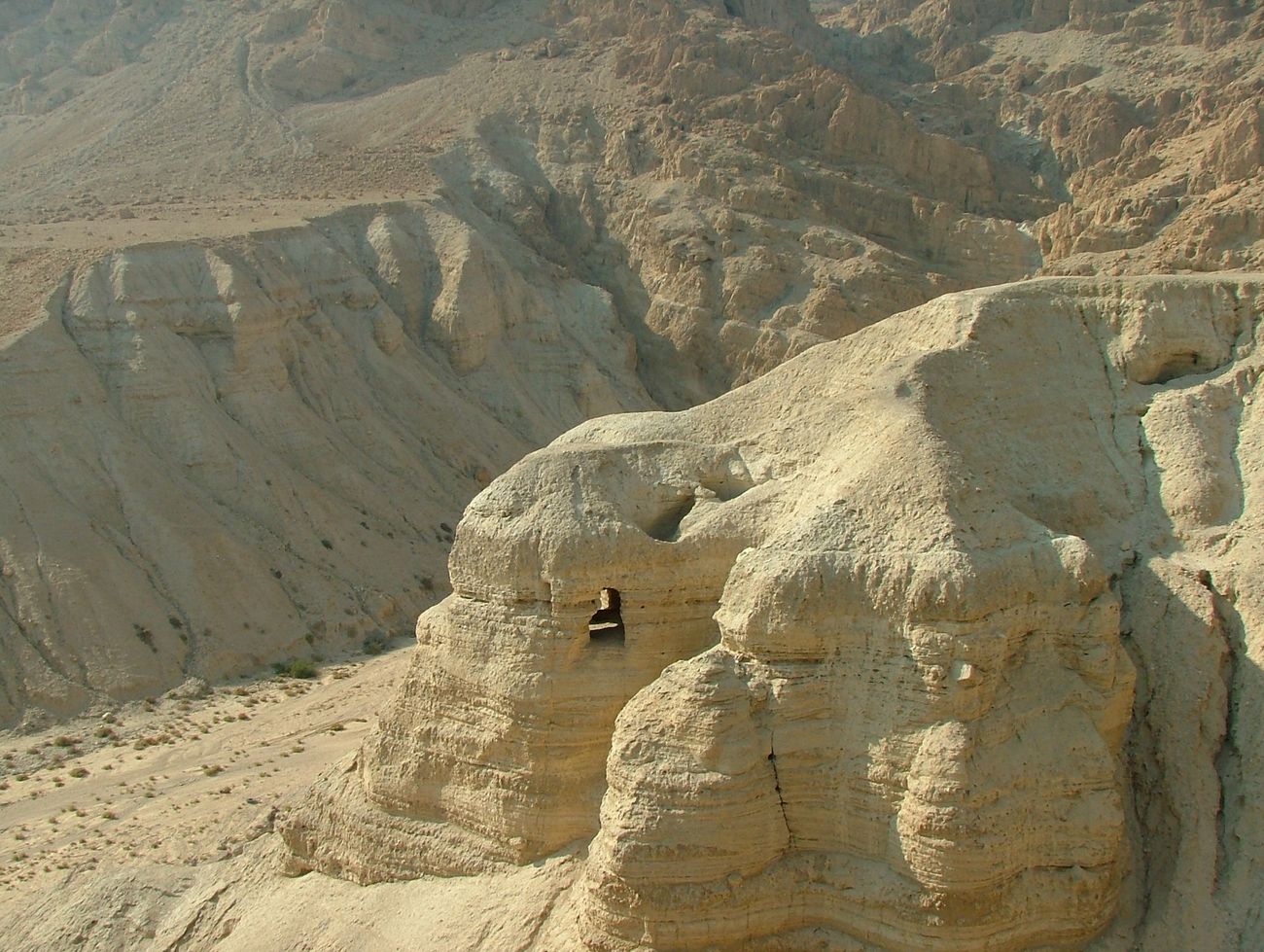
Only the eleven Qumran caves are counted on this page. Other Judean Desert sites, such as Masada, Wadi Murabba‘at and Nahal Hever, produced scrolls too, but they are a different story.
Chapter 3 · 15,000 pieces
What was in the library
Most of what came out of the caves was not whole scrolls but fragments, many the size of a fingernail. Cave 4 alone held about 15,000 pieces from roughly 500 manuscripts. Watch them sort, then try reassembling one yourself.
Each dot is a fragment; each small box is one manuscript. The proportions, 15,000 to about 500, follow the Cave 4 count on Wikipedia. The Biblical Archaeology Society counts 575 manuscripts in Cave 4 (BAS).
What kinds of texts (IAA catalog)
Which languages (IAA catalog)
What they were written on
Put a fragment back together
Chapter 4 · All but Esther
The Bible in the caves
Every book of the Hebrew Bible turned up at least once except Esther. Psalms, Deuteronomy, Genesis and Isaiah top the shelf, and they are the same four books the New Testament quotes most. Tap a jar, or switch to New Testament quotations.
Copies follow the table in Wikipedia; Proverbs, Ezra, Chronicles, Nehemiah and Esther, and every New Testament quotation count, follow Apologetics Press, which counts all Judean Desert sites. The Minor Prophets are one scroll of twelve books, and Nehemiah was one book with Ezra in the ancient Hebrew Bible.
Chapter 5 · 54 columns · 7.34 m
Unroll the Great Isaiah Scroll
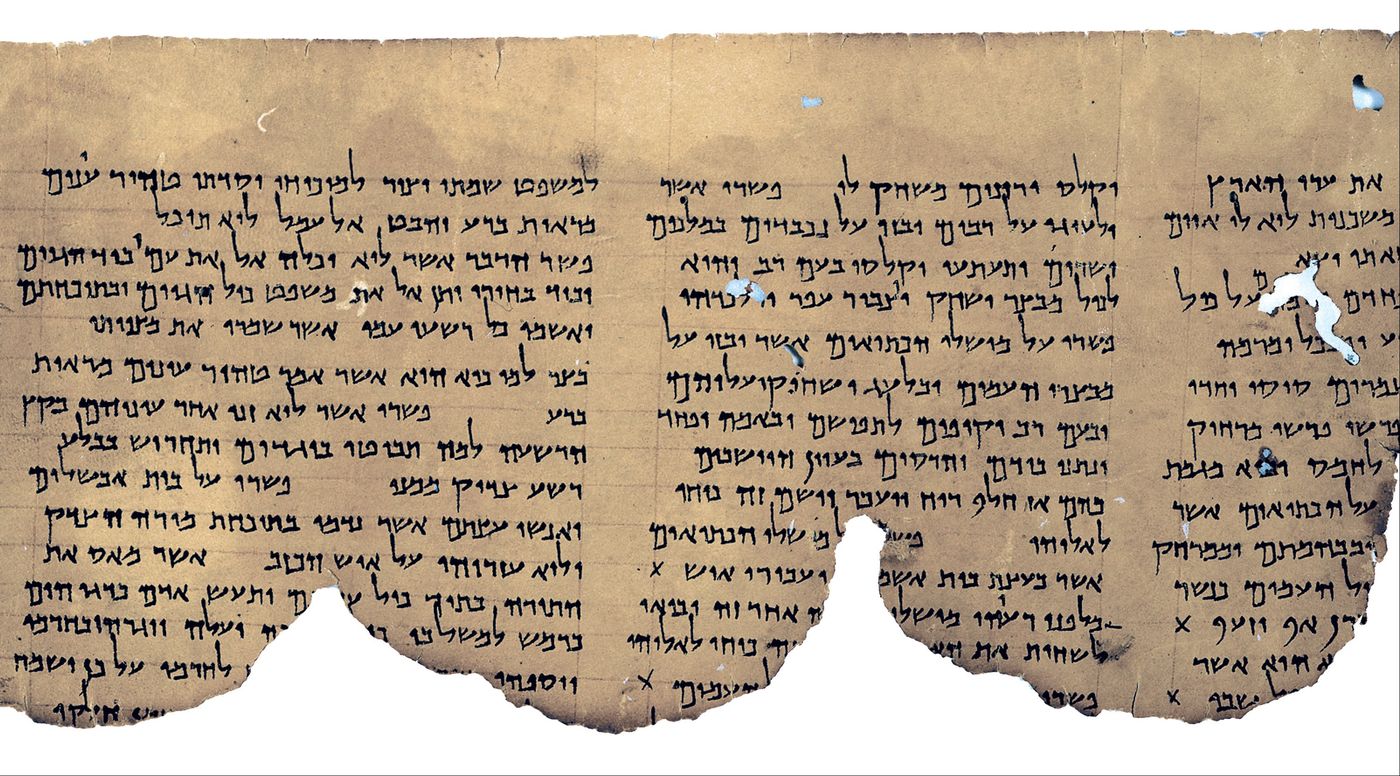
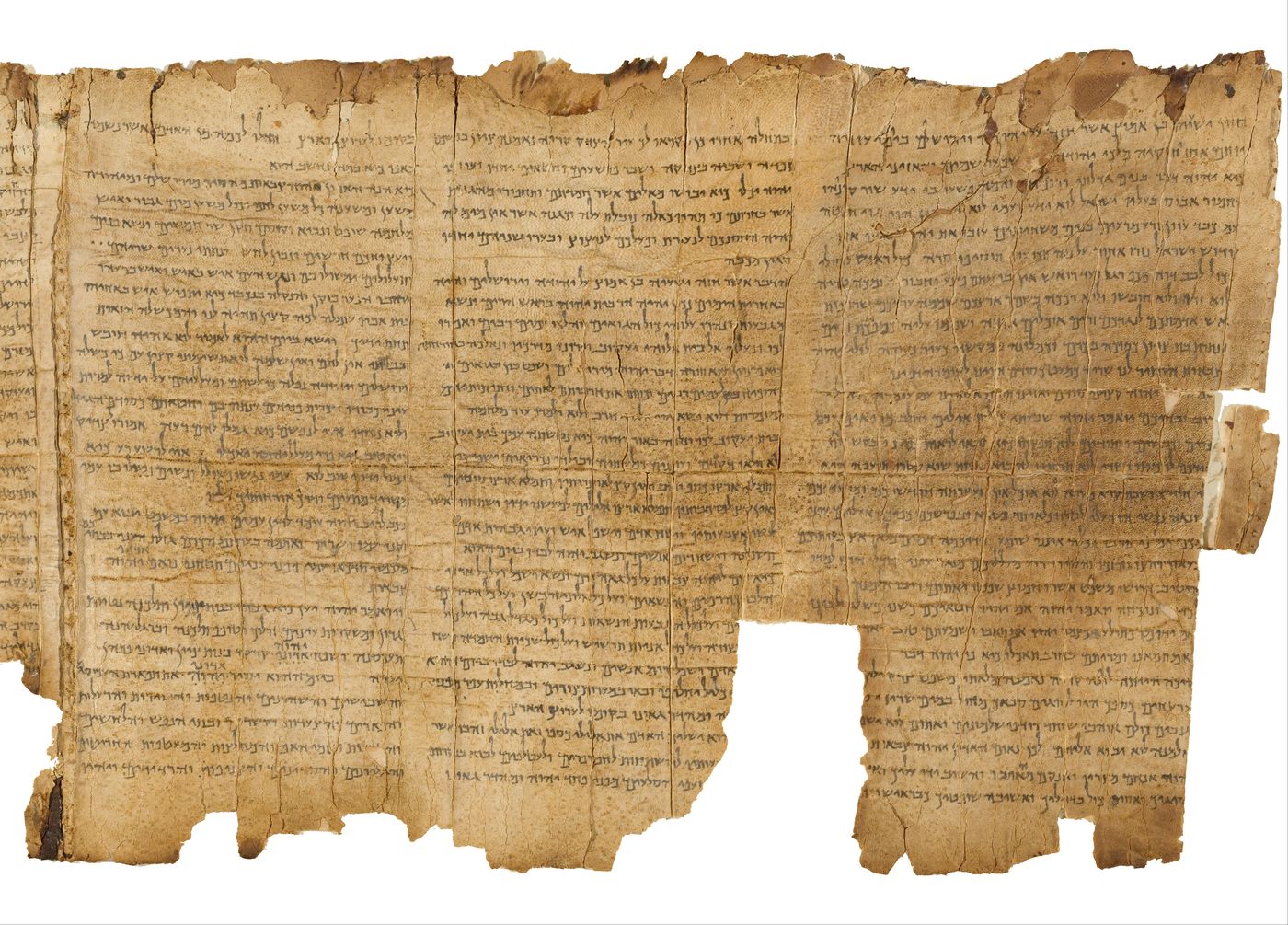
This is the real scroll, photographed end to end: 17 sheets of leather sewn together, 54 columns of Hebrew, all 66 chapters of Isaiah. It was copied about 125 BC. Tap any column to watch the translation appear beside it. The dots mark the 24 places this page connects to the Book of Mormon and the Doctrine and Covenants.
The Great Isaiah Scroll (1QIsaᵃ), photographed in full. Wikimedia Commons, part 1 and part 2, public domain. Column boundaries follow the Israel Museum’s Digital Dead Sea Scrolls viewer. The English is the King James Version, matched to each column. Hebrew Bibles number a few verses differently: Hebrew 8:23 is KJV 9:1, and Hebrew 63:19b is KJV 64:1.
All 54 columns, shaded by the Book of Mormon
Chapter 6 · 24 tie-ins
Isaiah and the Restoration
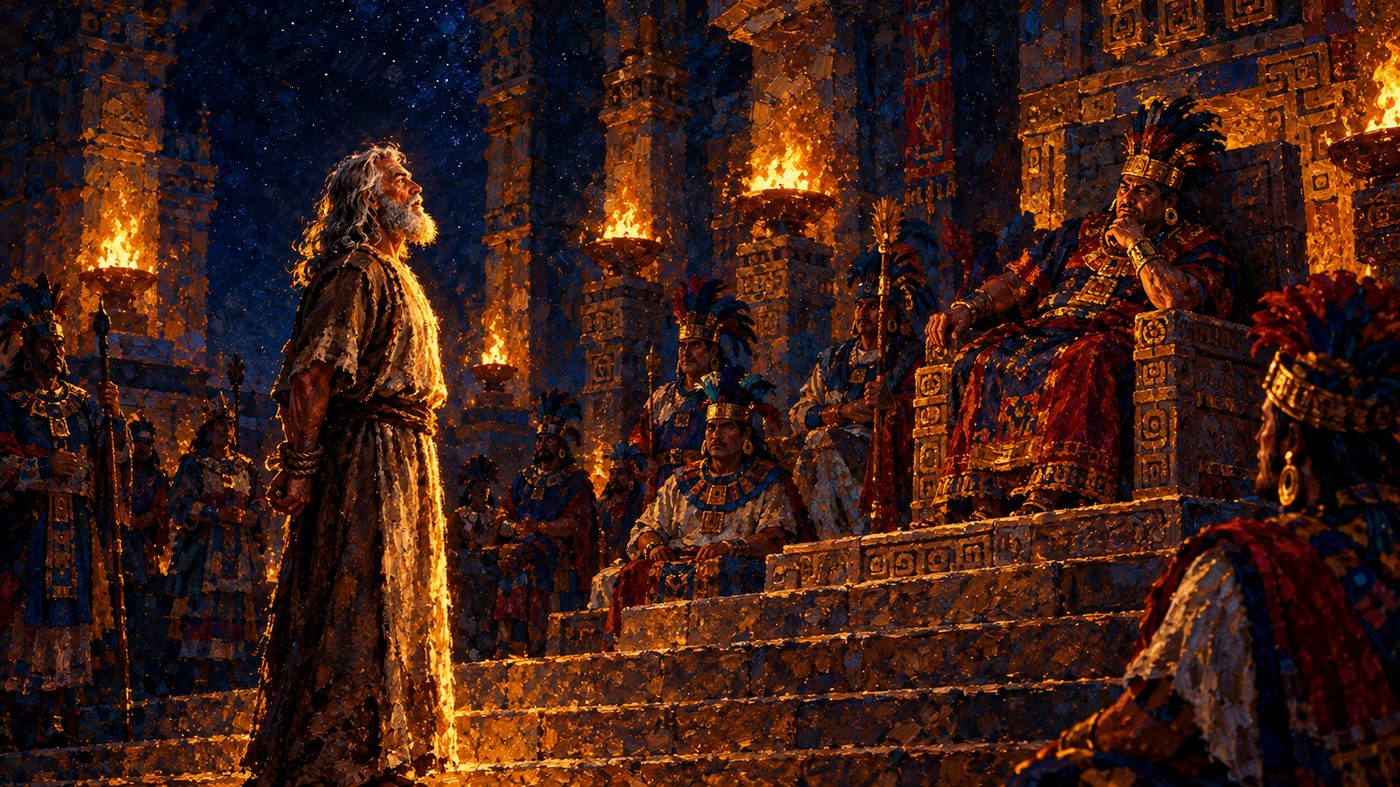
No book of the Bible is quoted more in the Book of Mormon. Nephi read it to his brothers, Jacob preached from it for two days, Abinadi recited it in chains and the risen Savior commanded, “search these things diligently; for great are the words of Isaiah.” Here is how those passages look on a copy made about a century before Christ.
Five places the scroll sides with the Book of Mormon
The five examples are from John Tvedtnes’s 1981 study, as summarized by Donald W. Parry and Stephen D. Ricks. No one has yet compared every verse. The Isaiah 33:8 reading is from the same book.
Three counts of Isaiah in the Book of Mormon
All 24 tie-ins
Chapter 7 · 8.15 m
The scrolls to scale
The longest scroll would stretch across a classroom. The Isaiah Scroll is a little shorter; the Copper Scroll is the length of a dining table. Here they are side by side.
Lengths: Temple Scroll 8.15 m, probably 8.75 m originally (Wikipedia); Great Isaiah Scroll 7.34 m (Israel Museum); Copper Scroll about 2.4 m (Wikipedia). Parry and Ricks give the Isaiah Scroll as 24.5 feet (7.47 m), measured differently.
Chapter 8 · 64 hiding places
The Copper Scroll
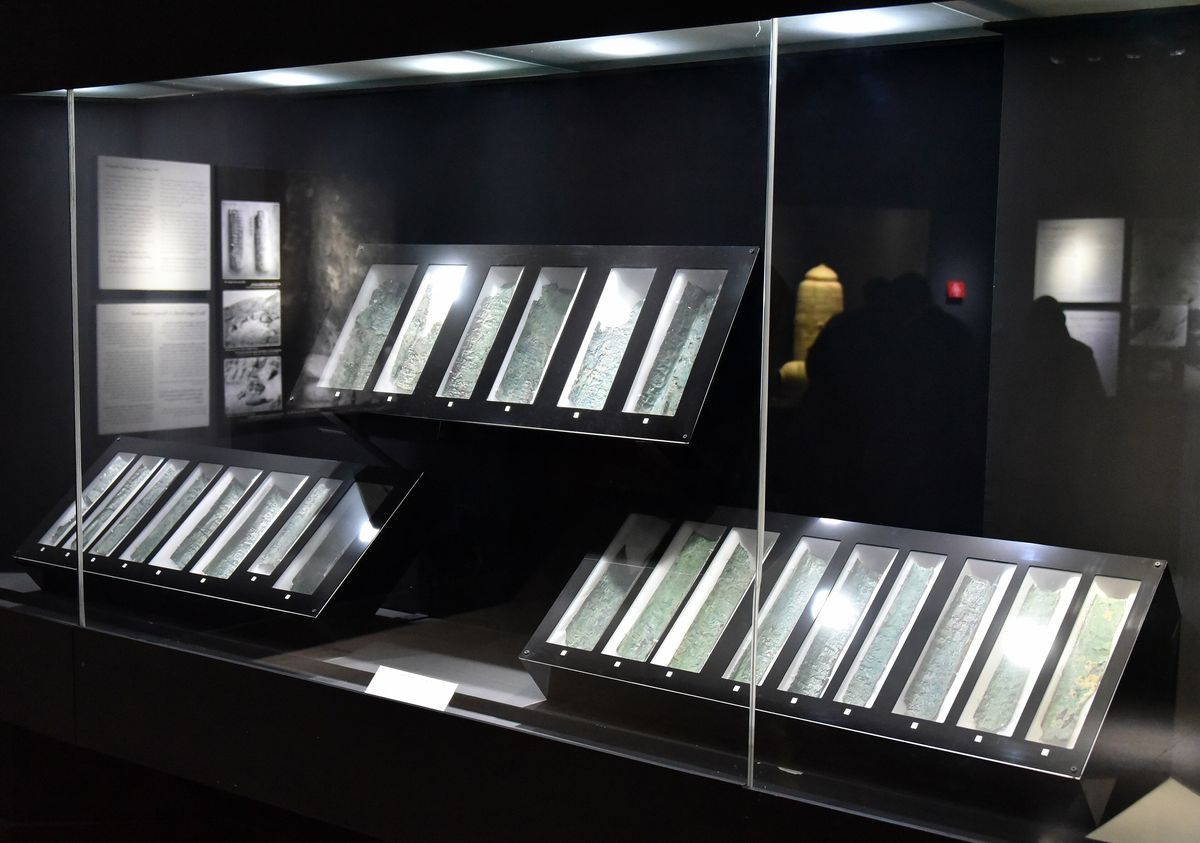
Found in Cave 3 on March 14, 1952, it is not leather but copper, rolled so tightly it had to be sliced into 23 strips at Manchester in 1955 and 1956. Inside was a list of 64 hiding places for gold, silver and sacred objects. None of it has been found.
Some stated amounts, in talents
“At Horebbah which is in the Vale of Achor under the stairs which go eastwards forty cubits: a box (filled with) silver weighing in all seventeen talents.”The first entry of the Copper Scroll, as translated in Parry and Ricks
Chapter 9 · ±30 years
Older than we thought
For decades the scrolls were dated mostly by handwriting. In 2025 a team at the University of Groningen combined new radiocarbon dates with a machine-learning model called Enoch. Many scrolls came out older, some by a century. Watch the bars move.
Ecclesiastes dates and the collection range from CNN; Daniel, handwriting styles and the authors’ dates from the University of Groningen. Red lines mark when scholars think each book’s author wrote.
Chapter 10 · 913 to 981
Why the numbers disagree
Ask how many Dead Sea Scrolls there are and you will hear 900, 930, 972 or 981. Ask about fragments and you will hear 15,000 or 25,000. None of these is wrong. They count different things.
How many manuscripts?
| Number | What it counts |
|---|---|
| 981 | Different manuscripts assembled from the 11 caves (Wikipedia). |
| 972 | Manuscripts found at Qumran, in another part of the same article (Wikipedia). |
| ~930 | Manuscripts imaged by the Leon Levy Digital Library (IAA). |
| 913 | Qumran entries in the Israel Antiquities Authority’s online catalog (IAA). |
| 25,000+ | Fragments in all, by one count (Biblical Archaeology Society). |
| 500 or 575 | Manuscripts in Cave 4 (Wikipedia and BAS). |
| 21 or ~30 | Manuscripts in Cave 11 (Wikipedia and IAA). |
| 433, 425 or 414 | Isaiah verses in the Book of Mormon, depending on whether paraphrases count (FAIR, Church News, Ensign). |
Why so many? Fragments are joined and split as scholars work; a few scrolls were bought rather than dug up, so their cave is uncertain; some catalogs include Greek and Latin pieces from other sites. Where this page uses one number, it names the source.
Chapter 11 · 4Q530 · 4 letters
Find Mahaway on the scroll
Mahijah is the one person in the Book of Moses whose name is not in the Bible. In 1976 a Cave 4 scroll called the Book of Giants was published, and in it a man named Mahaway is sent to Enoch with a question. Scroll down and watch the scroll zoom in on his name.
The fragment is a drawing made for this page from the Qumran-Digital transcription of 4Q530 (CC BY-SA 4.0), and this drawing is shared under the same license. Letters and line breaks follow the transcription; dark gaps mark text that has not survived; the outline is illustrative. Photographs of 4Q530 belong to the Israel Antiquities Authority and may not be reproduced without its permission, so see the real fragment in the Leon Levy Digital Library.
Book of Giants · 4Q530
Mahaway
M · H · W · Y
A giant the others send to Enoch to ask what their dreams mean (Scripture Central).
Moses 7:2
Mahujah
MHWY or MḤWY
“As I was journeying, and stood upon the place Mahujah, and cried unto the Lord…” Read it
The Hebrew letters behind the English spellings Mahujah and Mahijah follow Jeffrey Bradshaw at Pearl of Great Price Central. In 4Q203 only the first letters of the name survive; the whole name is in 4Q530.
Four letters, no vowels
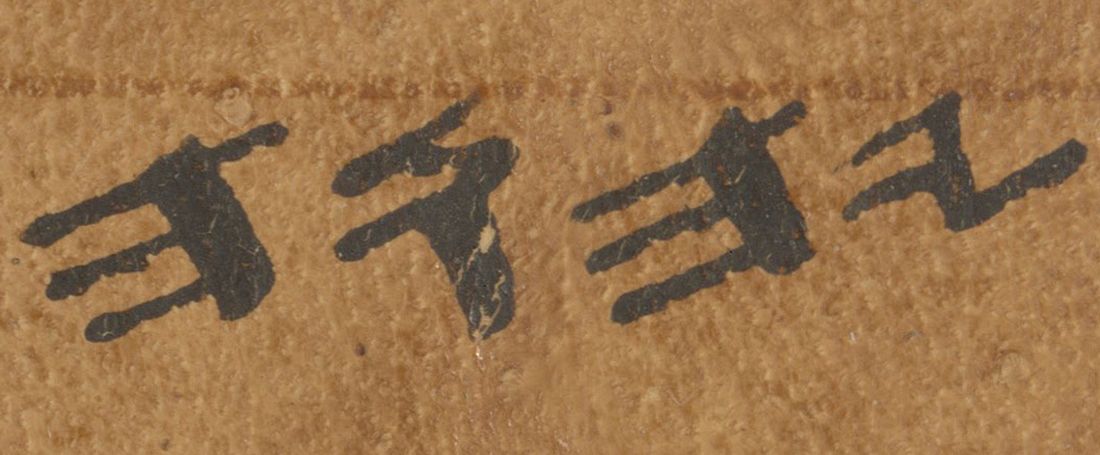
The scrolls were written in consonants only. The dots and dashes that mark vowels in a printed Hebrew Bible were added by the Masoretes between the 6th and 10th centuries AD, long after Qumran (Wikipedia). Readers supplied the vowels from memory. Two letters did double duty: waw (ו) can be the consonant W or the vowel o or u, and yod (י) can be the consonant Y or the vowel i or e (Wikipedia). So the four letters of מהוי can be read more than one way.
In most Qumran scrolls waw and yod “have no distinct form,” so editions often disagree over which one a scribe wrote (Ben-Gurion University study). That is why a single letter separates Mahujah from Mahijah, and the Book of Moses itself uses both. The J in these English names stands for the Hebrew Y sound, as in Hallelujah, “praise ye Jah” (Wikipedia). This shows how the names can line up; it does not by itself prove they are the same person.
Not everyone agrees on what the match means. Colby Townsend has argued that the names could come from sources Joseph Smith had in 1830 (excerpt), and Jeffrey Bradshaw has replied in Interpreter. For a fuller Latter-day Saint reading, see Bradshaw’s Moses 6–7 and the Book of Giants.
Chapter 12 · Since 1994
Latter-day Saints and the scrolls
Latter-day Saint scholars have worked on the scrolls for decades, and a few finds have drawn special interest. The Church itself has taken no official position on them.
“General Authorities of the Church of Jesus Christ of Latter-day Saints have never taken an official position or made an official statement on the Dead Sea Scrolls,” and the editors stress “far more differences between the Qumranites and the Latter-day Saints than there are similarities” (Parry and Ricks). A deed naming a man called Alma came from Nahal Hever, outside the eleven Qumran caves, so it is not counted here.
Chapter 13 · Online and in person
See them yourself
You can study the real scrolls from home, or see them in Jerusalem and Amman.
Israel Museum, Jerusalem
The Shrine of the Book holds the first seven scrolls. The museum’s Digital Dead Sea Scrolls site, online since 2011, lets you zoom into the Great Isaiah Scroll column by column.
Leon Levy Digital Library
The Israel Antiquities Authority has imaged about 930 manuscripts with multispectral cameras. Browse the digital library.
Jordan Museum, Amman
The Copper Scroll has been on display here since 2013, with fragments from Cave 4 (Wikipedia).
Qumran National Park
The ruins sit below the caves. Cave 4 is visible from the site, and Cave 6 is the easiest scroll cave to reach (IAA).
Picture credits
- Cave 4, Qumran, 2019. Bahnfrend, Wikimedia Commons, CC BY-SA 4.0
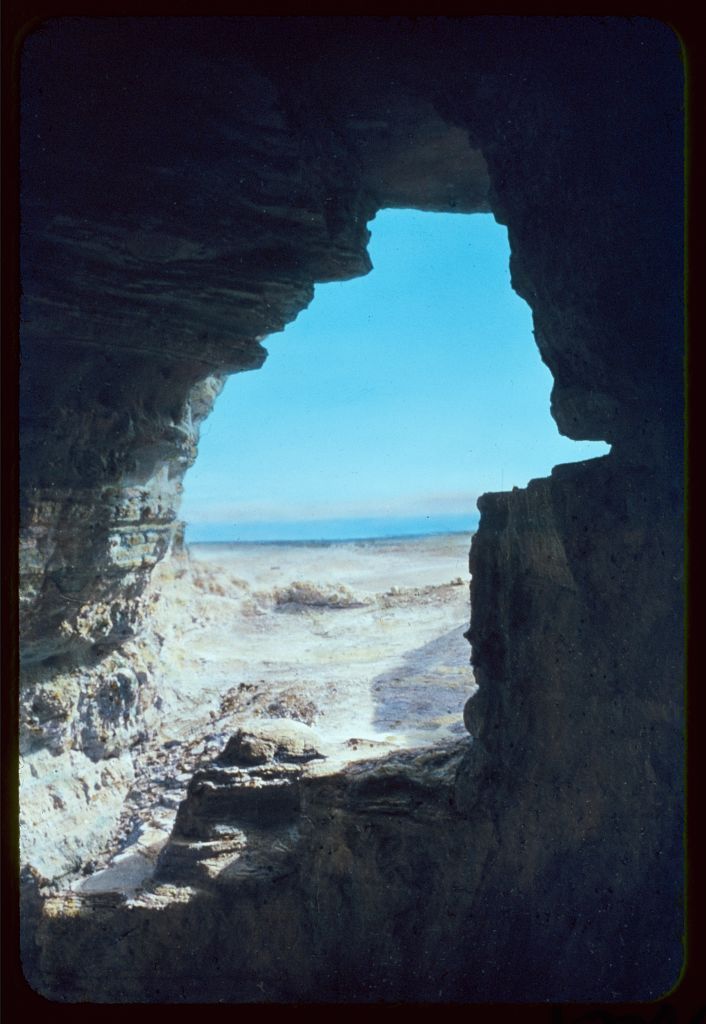
- The Dead Sea seen from a cave at Qumran. Eric Matson, Matson Photo Service, Wikimedia Commons, CC0
- Two scroll jars at the Jordan Museum, Amman. Osama Shukir Muhammed Amin, Wikimedia Commons, CC BY-SA 4.0
- The entrance to the cave where the first scrolls were found, 1950s. Willem van de Poll, Nationaal Archief, Wikimedia Commons, CC0
- The Temple Scroll from Cave 11. Google Art Project, Wikimedia Commons, public domain
- The Copper Scroll strips on display at the Jordan Museum. Osama Shukir Muhammed Amin, Wikimedia Commons, CC BY-SA 4.0
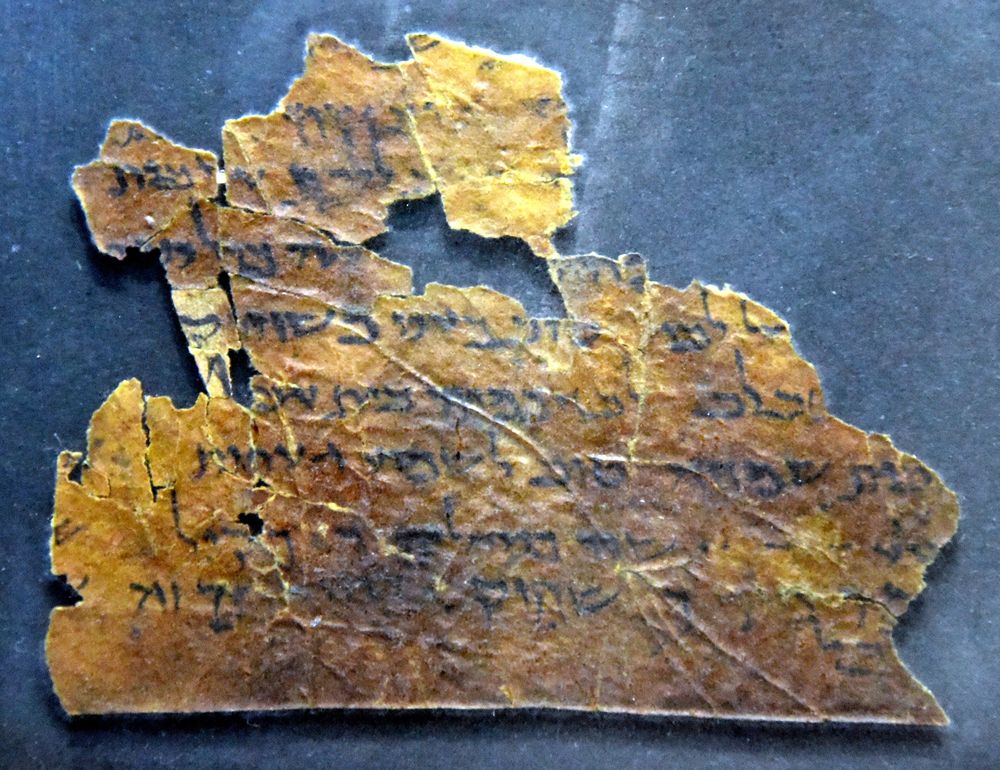
- Ecclesiastes fragment 4Q109 from Cave 4, Jordan Museum. Osama Shukir Muhammed Amin, Wikimedia Commons, CC BY-SA 4.0
- The Habakkuk Commentary (1QpHab) from Cave 1. Google Art Project, Wikimedia Commons, public domain
- The divine name written in the old Paleo-Hebrew letters inside the Great Psalms Scroll (11Q5). Wikimedia Commons, public domain
- Scrolls from Cave 1 before they were unrolled. Abraham Meir Habermann, Wikimedia Commons, public domain
- Cave 4 in the marl cliffs above Wadi Qumran. SuperJew, Wikimedia Commons, CC BY-SA 3.0
- The Great Isaiah Scroll (1QIsaᵃ), photographed in full. Wikimedia Commons, part 1 and part 2, public domain
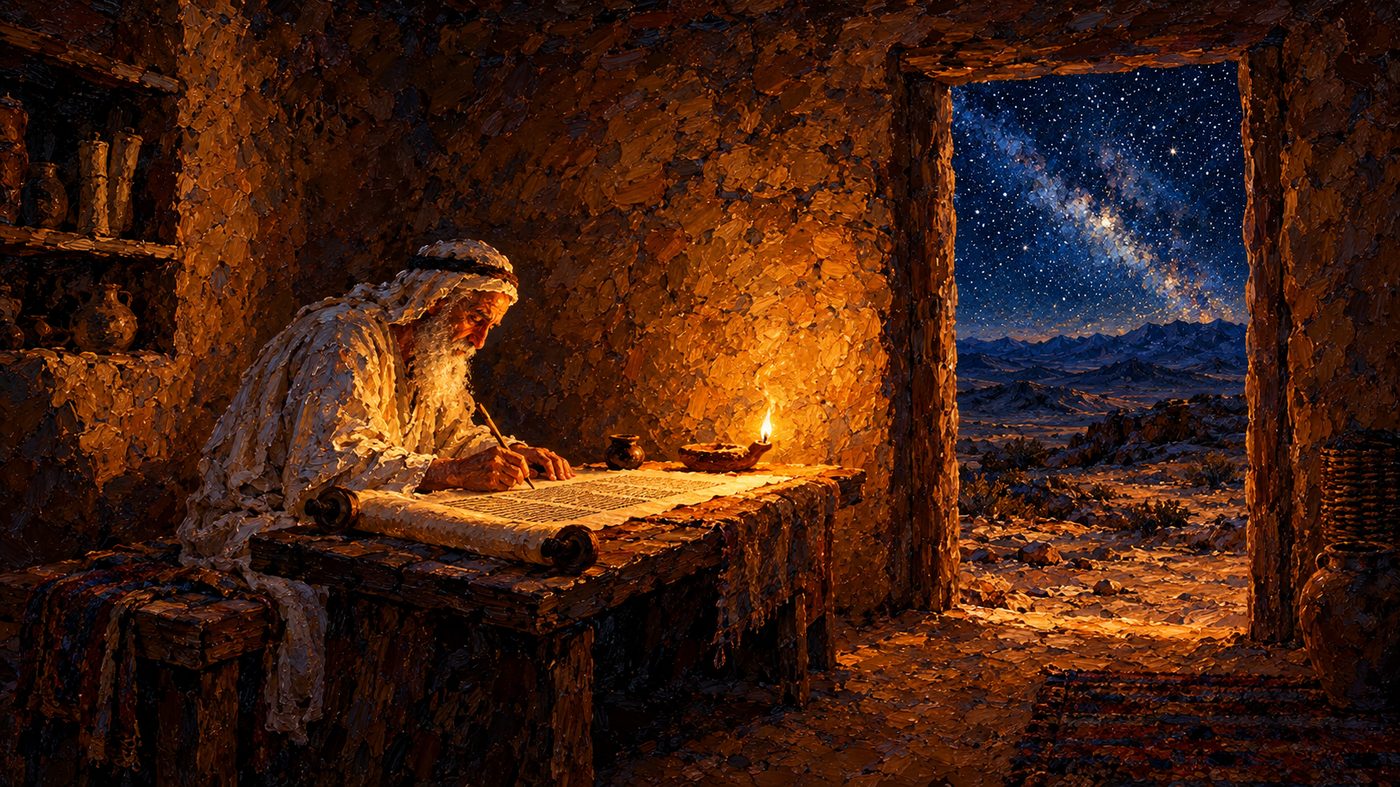
- Paintings (the shepherd, Cave 4, the scribe and Abinadi): original artwork made for Weak Things. They are impressions, not historical records.
How we counted
Sources and notes
- Collection and caves. Manuscript totals, book counts, the discovery story and dates: Wikipedia, Dead Sea Scrolls, Qumran Caves and Muhammed edh-Dhib. Cave-by-cave contents: Israel Antiquities Authority, Discovery Sites. Catalog counts by language and type: IAA archive. Fragment totals: Biblical Archaeology Society; Cave 4: BAS. Who found which caves: Parry and Ricks, Part 1.
- Bible books. Copies by book: Wikipedia for the 24 books it lists; the rest, and New Testament quotations: Apologetics Press.
- The Great Isaiah Scroll. Length, columns and date: Israel Museum exhibition text. Column boundaries and verse ranges: Israel Museum Digital Dead Sea Scrolls. Images: Wikimedia Commons, public domain. Verse positions on the image were found by counting Hebrew letters and detecting lines in each column; eight were checked by eye against the Hebrew, and the rest are marked as estimates within about a line. English text: King James Version.
- Book of Mormon and Isaiah. Five agreements and Isaiah 33:8: Parry and Ricks, The Dead Sea Scrolls: Questions and Responses for Latter-day Saints. Isaiah verse counts: FAIR, Church News, 1992 and Ensign, October 1973. Doctrine and Covenants: BYU Religious Studies Center. Community Rule and Isaiah 40:3: BYU Religious Studies Center. Scripture text is quoted from the Church’s scriptures website, linked on every card.
- Copper Scroll. Wikipedia, Copper Scroll; translation of the first entry from Parry and Ricks.
- Dating. University of Groningen, 2025 and CNN, June 7, 2025.
- Latter-day Saint scholarship. Parry and Ricks, questions 26, 31, 32, 65 and 69.
- What the numbers can't say. A count shows size, pace and reach. It cannot measure faith, service or a changed heart. For those, read, serve and see.
Keep exploring by the numbers
See all the projects in one place