Elder David A. Bednar, “Converted unto the Lord” (2012)
How testimony and conversion differ, learned from the Apostle Peter.3
Read the talk →Scripture Story Sketch Notes · Matthew 16:13–23
“Thou art the Christ, the Son of the living God.” Matthew 16:16
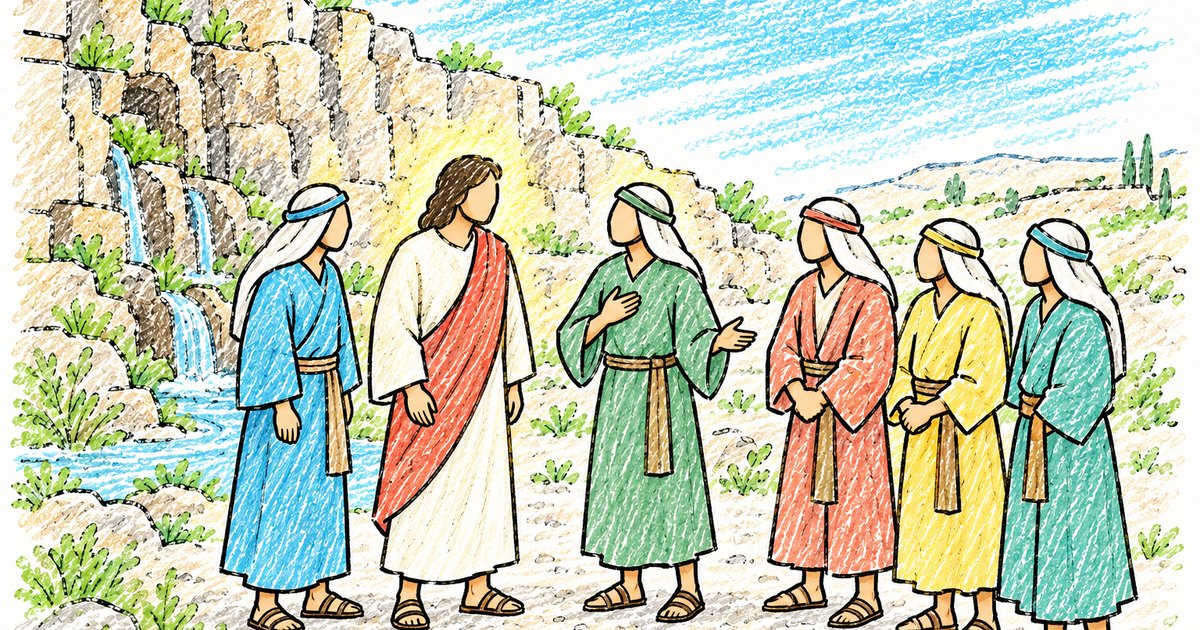
Near a great rock at Caesarea Philippi, Jesus asked His disciples who they believed He was. Peter answered by revelation, and Jesus promised to build His Church on that rock.
Before you begin
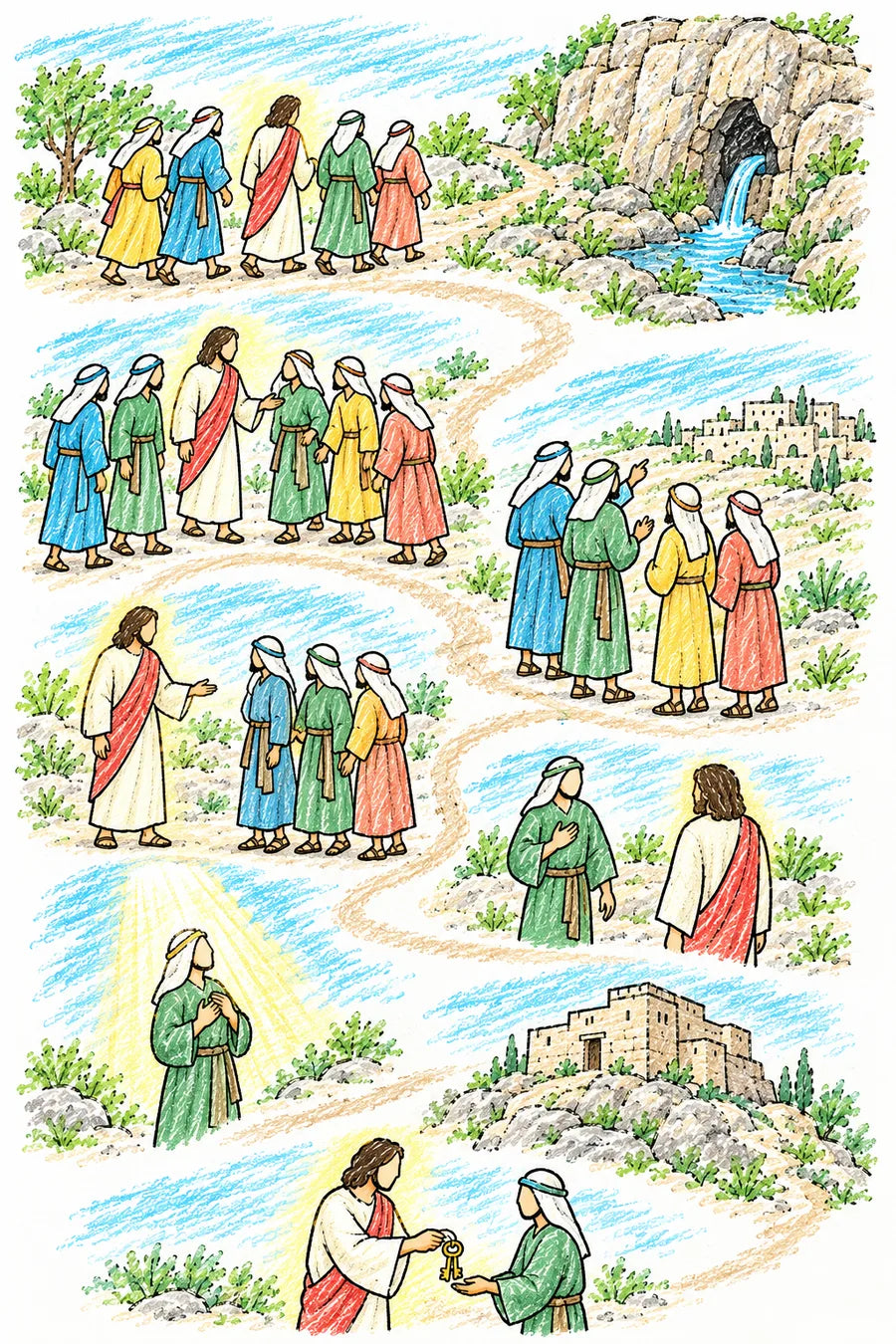
When Jesus came into the region of Caesarea Philippi, He asked His disciples, “Whom do men say that I the Son of man am?” They answered that some said John the Baptist, some Elijah, and others Jeremiah or one of the prophets. Then He asked, “But whom say ye that I am?” Simon Peter answered, “Thou art the Christ, the Son of the living God.”
Jesus told Peter he was blessed, because flesh and blood had not revealed this to him, but His Father in heaven. He said, “Thou art Peter, and upon this rock I will build my church; and the gates of hell shall not prevail against it,” and promised Peter the keys of the kingdom of heaven. From then on, Jesus began to teach that He must go to Jerusalem, suffer, be killed and rise again the third day. When Peter protested, Jesus corrected him and taught him to set his mind on the things of God.
The region of Caesarea Philippi, near the base of Mount Hermon and a source of the Jordan River.
Watch how Jesus moves from what others say to what Peter knows, and how Peter came to know it.
Read it yourself: Matthew 16:13–23
Part 1 of 7
Eight stops from the great rock at Caesarea Philippi to the keys of the kingdom. Scroll, or tap a number on the map.
Part 2 of 7
Four scenes: the question, Peter’s answer, the keys and the road ahead. Look for the Savior in each one.
Read it plainly
Tap any dotted word for its meaning. The scripture stays exactly as written.1
Part 3 of 7
Small details tell the story. Some cards are details in the text; others share insights from Church leaders, Church resources or outside sources. Each card says which.
All nine. The cliff, the road, the group, the heart, the beam, the rock, the house, the gate and the keys. Matthew 16:13–23
Part 4 of 7
Many voices, seeking my own witness, standing firm, or ready to testify. Which feels most like you right now?
A next step for you
Your choice is saved only on this device.
Try it
Tap each tile to see how people answered Jesus’s question. Then answer it yourself.
Others’ answers matter less than yours.
Part 5 of 7
A little background on Caesarea Philippi, keys and the names Peter and rock helps the story come alive. Outside sources are labeled.
Caesarea Philippi “is located near the base of Mount Hermon, is one of the sources of the Jordan River.”2
Living water, solid rock.
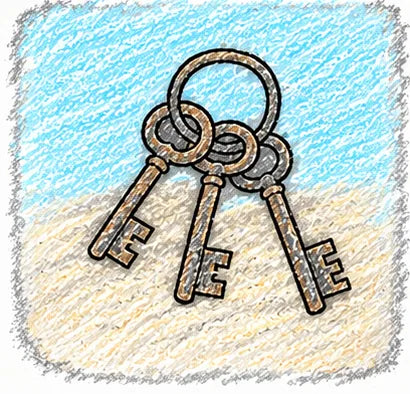
“In the first century A.D., keys were typically made of iron and were bulkier, more expensive, and less common than modern house keys.”2
A sign of trust.
Peter, James and John “received the promised keys on the Mount of Transfiguration.”2
The promise was kept.
When Jesus spoke of His coming death, Peter protested. Jesus gently but firmly corrected him: “thou savourest not the things that be of God.”1
Testimony keeps growing.
Word study · Greek
Petros Πέτρος · “Peter” (Matthew 16:18)
Word study · Greek
petra πέτρα · “rock” (Matthew 16:18)
What the text does not say
Jesus doesn’t ask Peter to repeat what others say, or praise him for being clever. He says Peter’s knowledge came from the Father. And He doesn’t say Peter is finished growing. Moments later, Peter still had more to learn.1
Part 6 of 7
He asks the question that matters most, and His Father answers it by revelation. He builds His Church on that rock.
“A testimony is a gift from God and is available to all of His children.”
Elder David A. Bednar3“A testimony is personal knowledge of spiritual truth obtained by revelation.”
“God stands revealed or he remains forever unknown.”
“There is no other foundation upon which the Lord could build his Church and kingdom.”
Jesus
“For what is a man profited, if he shall gain the whole world, and lose his own soul?” Matthew 16:26
Part 7 of 7
A question to ask in prayer
Father, is Jesus the Christ, and how can I know it more surely? Matthew 16:17
Ask sincerely, then watch for quiet feelings and thoughts. Write down what comes.
One way to build on the rock each day. It saves on this device, one day at a time.
0 of 7 today
Seven days of building on the rock. Come again tomorrow.
A quiet moment
“But whom say ye that I am?”
Read Matthew 16:13–19 slowly. Picture Jesus turning to you on that road and asking the question. What would you say? Matthew 16:13–19
A verse to hold
Talk about it
For adults and deeper study
Longer readings, harder questions, and where to study next. Each one says what it is before you click.
How testimony and conversion differ, learned from the Apostle Peter.3
Read the talk →Why revelation is the rock on which the Lord builds His Church.4
Read the talk →Caesarea Philippi, the keys of the kingdom, and the Mount of Transfiguration.2
Read the chapter →Read Peter’s witness, the promise of the keys, and what Jesus taught about following Him.1
Matthew 16 →Every quotation, gloss, and piece of background on this page is listed here: scripture first, then Church sources, then outside scholarship (labeled).
Quotations checked against the linked pages on October 11, 2026. Scripture is quoted from the King James Version as published in the Gospel Library.

He asks who we say He is, and the Father answers by revelation. Build on that rock. Matthew 16:16
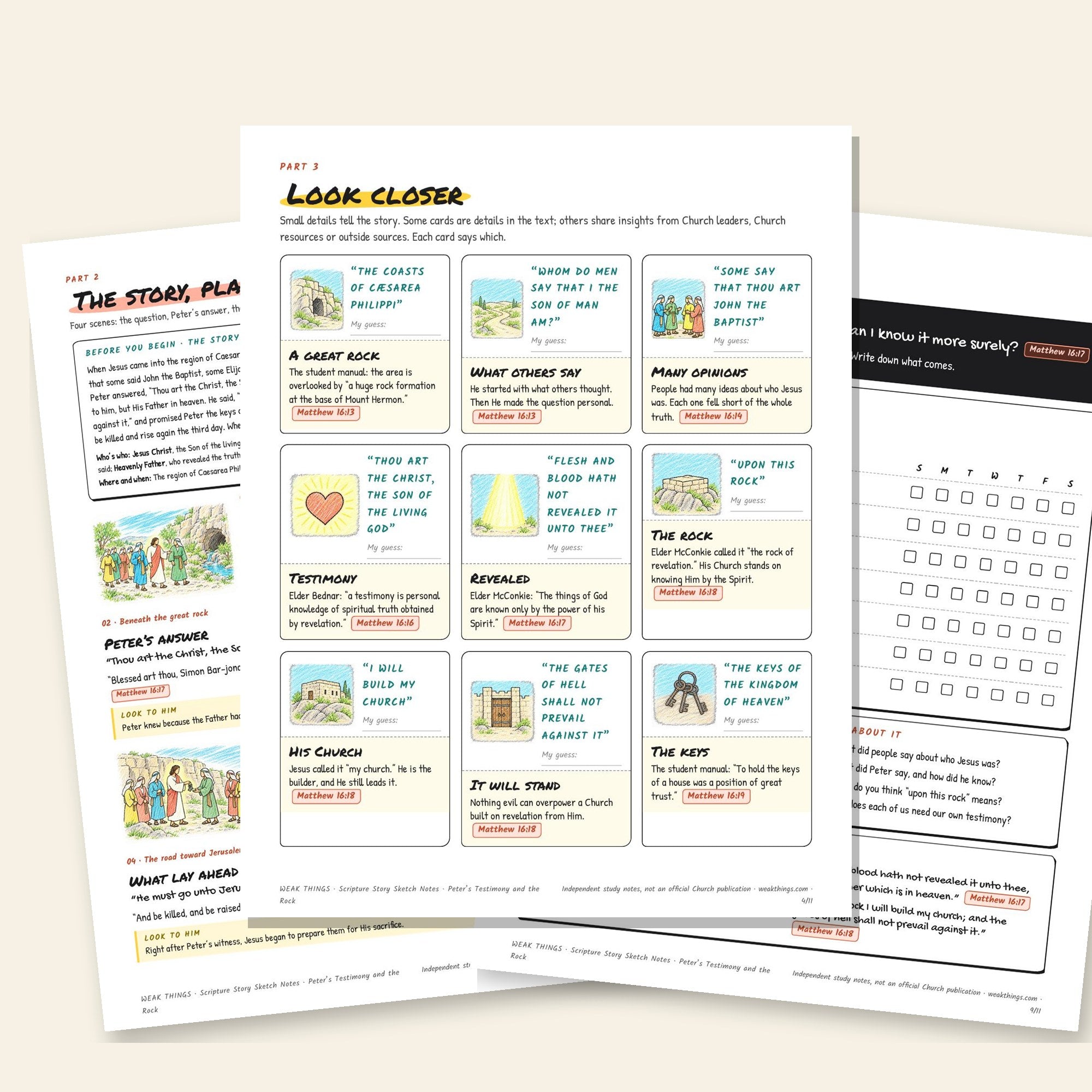
Printable sketch notes
Everything on this page as a 11-page letter-size PDF: the map, scenes, cards, activity, word studies, tracker, Go deeper and sources. For home, class or a quiet Sunday.
More stories
Peter’s Testimony and the Rock is part of the Scripture Story Sketch Notes for the New Testament, set alongside Come, Follow Me for April 5–11, 2027 (Matthew 15–17; Mark 7–9).
See every story See all 2027 weeksIndependent study notes from Weak Things, not an official publication of The Church of Jesus Christ of Latter-day Saints. Scripture quotations are from the King James Version. The words are in Matthew 16:13–23; the insights in “Look closer” are labeled by source.