President Gordon B. Hinckley, “Forgiveness” (2005)
Forgiveness as “the greatest virtue on earth,” the prodigal son, and the Atonement as “the supreme act of forgiveness.”4
Read the talk →Scripture Story Sketch Notes · Philemon 1
“Not now as a servant, but above a servant, a brother beloved.” Philemon 1:16
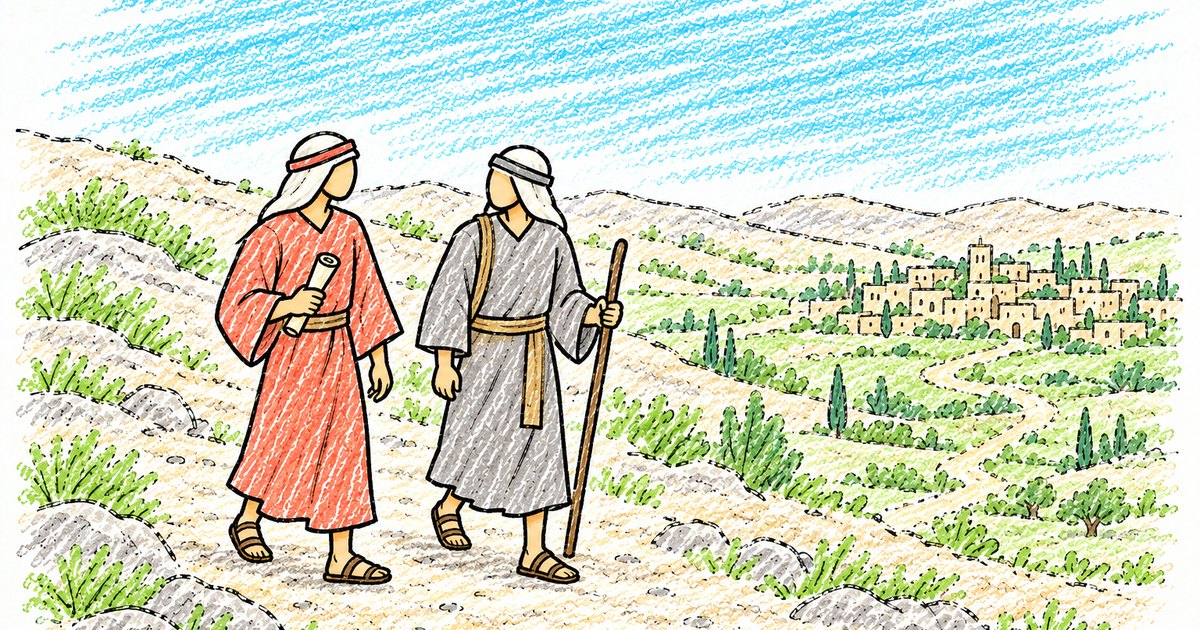
A slave ran away from a Christian household, found Paul in prison and found Jesus Christ. Then Paul sent him home with a letter asking his master to welcome him back as a brother.
Before you begin
Philemon was a Christian in Colosse who let the Saints meet in his house. A slave in his household, Onesimus, ran away, and may have taken something with him. Under Roman law a runaway could be beaten, branded or even killed. Somehow Onesimus found the Apostle Paul, who was a prisoner, and Paul taught him the gospel. Onesimus became, in Paul’s words, “my son Onesimus, whom I have begotten in my bonds.”
Paul sent him home with a short letter. He asked Philemon to take Onesimus back “not now as a servant, but above a servant, a brother beloved,” and to “receive him as myself.” Then Paul made an offer: “If he hath wronged thee, or oweth thee ought, put that on mine account.”
A letter from Paul in prison to Philemon’s house in Colosse.
Watch how Paul’s plea for Onesimus looks like the Savior’s plea for us.
Read it yourself: Philemon 1:1–25
Part 1 of 7
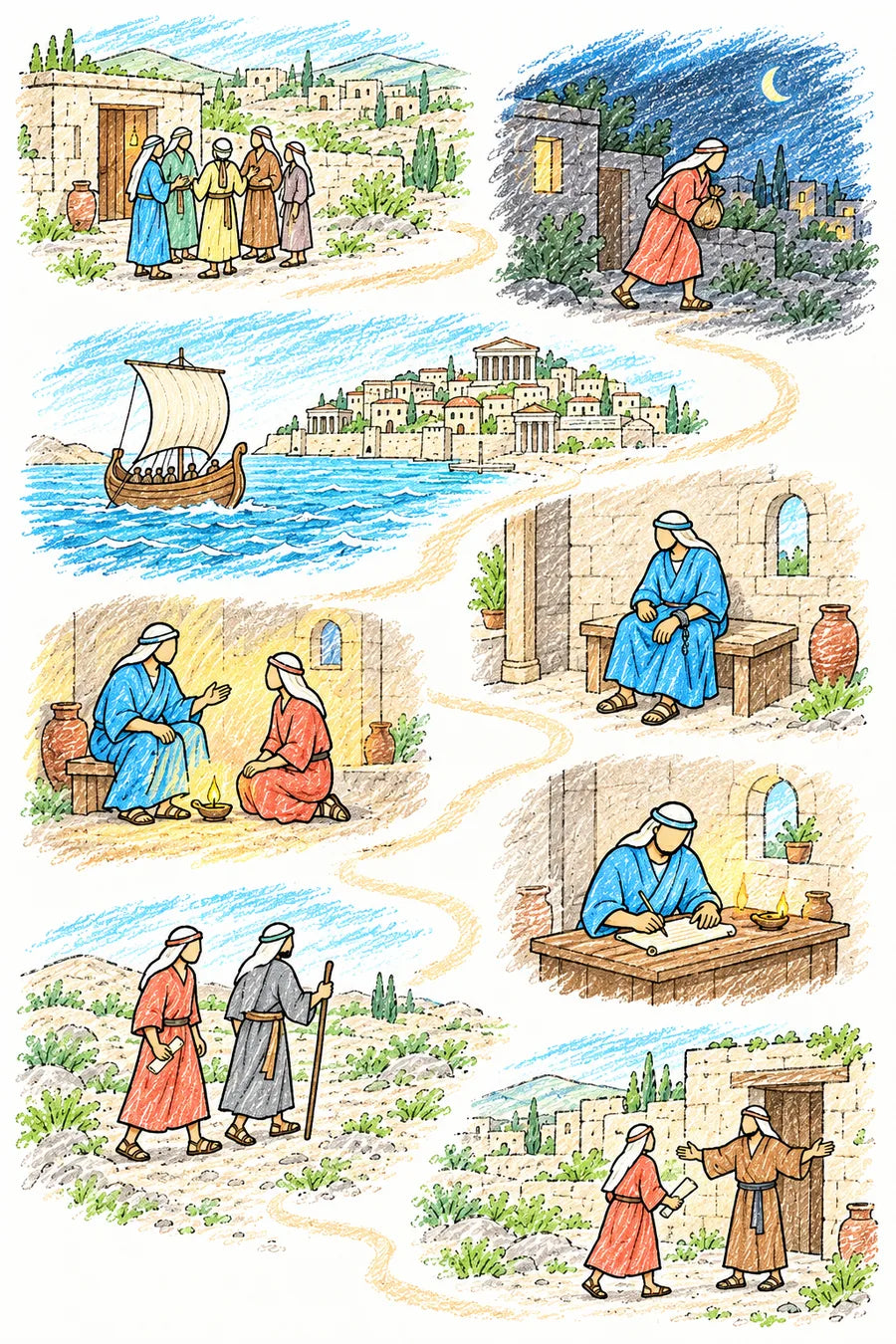
Eight stops from a house in Colosse to Rome and back again. Scroll, or tap a number on the map.
Part 2 of 7
Four scenes: running away, a new son, the letter and the welcome home. Look for the Savior in each one.
Read it plainly
Tap any dotted word for its meaning. The scripture stays exactly as written.1
Part 3 of 7
Small details tell the story. Some cards are details in the text; others share insights from Church leaders or Church resources. Each card says which.
All nine. The bundle, the letter, the chain, the ledger, the ship, the house, the hands, the road and the heart. Philemon 1:1–25
Part 4 of 7
Running away, making it right, at the door, or welcome home. Which feels most like you right now?
A next step for you
Your choice is saved only on this device.
Try it
Follow Onesimus from Colosse to Rome and back again. A light goes ahead of you. At Philemon’s door, you choose.
“Receive him as myself.” Philemon 1:17
Part 5 of 7
A little background helps us picture what a runaway slave faced and what Paul was asking. Outside sources are labeled.
Slavery “was supported by Roman law,” and runaways could be “severely beaten, branded on the forehead, or even killed.”6
Going back took real faith.
Philemon was “a Greek convert who probably lived in Colossae” and hosted a congregation.5
The church met in his house.
Paul asked Philemon to receive Onesimus “without the severe punishments that would usually be inflicted on runaway slaves.”5
Mercy over the law’s penalty.
They “belonged to different social and economic classes,” and Onesimus “may have wronged Philemon.”6
Brotherhood crossed every line.
Word study · Greek
Onēsimos Ὀνήσιμος · the name “Onesimus” (Philemon 1:10)
Word study · KJV
bowels “mine own bowels” (Philemon 1:12)
What the text does not say
The letter does not say how Philemon answered. Paul writes that he is confident Philemon “wilt also do more than I say.” Scripture leaves the door open, and invites us to finish the story with mercy.1
Part 6 of 7
He is our Advocate, the One who says “put that on mine account,” and the reason enemies can become family.
“The great Atonement was the supreme act of forgiveness.”
President Gordon B. Hinckley4“Somehow forgiveness, with love and tolerance, accomplishes miracles that can happen in no other way.”
Of forgiveness: “I think it may be the greatest virtue on earth, and certainly the most needed.”
“Our relationship with Jesus Christ brings us into a familial relationship with all other followers of Christ.”
The Savior
“Father, behold the sufferings and death of him who did no sin … Wherefore, Father, spare these my brethren that believe on my name.” Doctrine and Covenants 45:4–5
Paul
“With Onesimus, a faithful and beloved brother, who is one of you.” Colossians 4:9
Part 7 of 7
A question to ask in prayer
Who do I need to welcome back, or whom do I need to go back to? Philemon 1:17
Ask Heavenly Father to bring one person to mind. Then ask the Savior for the courage and the mercy to take the first step.
One step of mercy each day. It saves on this device, one day at a time.
0 of 7 today
Seven days of mercy. Come again tomorrow.
A quiet moment
“Put that on mine account.”
Read Philemon 1:10–19 slowly. Picture the Savior saying those words about you to the Father. Thank Him for pleading your cause. Philemon 1:10–19
A verse to hold
Talk about it
For adults and deeper study
Longer readings, harder questions, and where to study next. Each one says what it is before you click.
Forgiveness as “the greatest virtue on earth,” the prodigal son, and the Atonement as “the supreme act of forgiveness.”4
Read the talk →Roman law on runaways, why receiving Onesimus was hard, and how Paul’s plea mirrors the Savior’s.6
Read the lesson →Who Philemon was, the church in his house, and Paul’s offer to repay.5
Read the chapter →Onesimus traveled back to Colosse with Tychicus, and Paul called him “a faithful and beloved brother.”2
Colossians 4 →Every quotation, gloss, and piece of background on this page is listed here: scripture first, then Church sources, then outside scholarship (labeled).
Quotations checked against the linked pages on October 11, 2026. Scripture is quoted from the King James Version as published in the Gospel Library.

Come home, and welcome others home. In Christ we are family. Philemon 1:16

Printable sketch notes
Everything on this page as a 11-page letter-size PDF: the map, scenes, cards, activity, word studies, tracker, Go deeper and sources. For home, class or a quiet Sunday.
More stories
Philemon and Onesimus is part of the Scripture Story Sketch Notes for the New Testament, set alongside Come, Follow Me for October 18–24, 2027 (1 and 2 Timothy; Titus; Philemon).
See every story See all 2027 weeksIndependent study notes from Weak Things, not an official publication of The Church of Jesus Christ of Latter-day Saints. Scripture quotations are from the King James Version. The story is told in Philemon and Colossians 4; the insights in “Look closer” are labeled by source.