Elder Neil L. Andersen, “Preparing the World for the Second Coming” (2011)
How young people help prepare the world for the Savior’s return.4
Read the talk →Scripture Story Sketch Notes · Joseph Smith—Matthew 1:37–50
“And whoso treasureth up my word, shall not be deceived.” Joseph Smith—Matthew 1:37
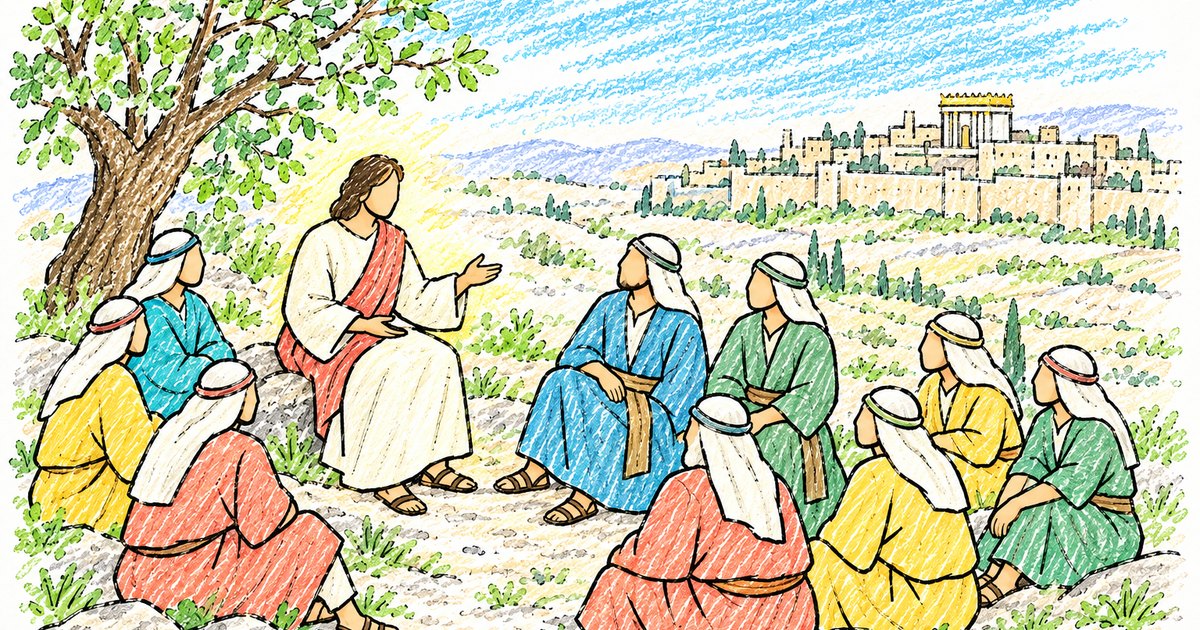
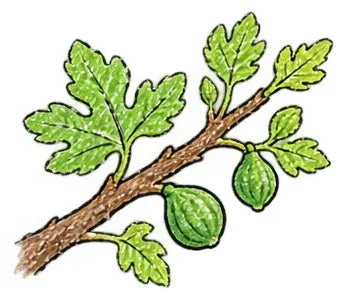
On the Mount of Olives, Jesus taught His disciples about His Second Coming. Like new leaves on a fig tree, signs would show the season was near, though only the Father knows the day. He invited everyone to watch, treasure His word, and be found faithfully doing good.
Before you begin
On the Mount of Olives, Jesus answered His disciples’ question about the sign of His coming. He promised, “Whoso treasureth up my word, shall not be deceived.” He told them to “learn a parable of the fig tree”: when its branches are tender and put forth leaves, summer is near. In the same way, when His elect see the signs, “they shall know that he is near, even at the doors.” But “of that day, and hour, no one knoweth; no, not the angels of God in heaven, but my Father only.”
His coming would be like the days of Noah, when people kept eating, drinking and marrying “and knew not until the flood came.” Two would be in the field and two grinding at the mill; one would be taken and the other left. So He said, “Watch, therefore,” and “be ye also ready.” He promised, “Blessed is that servant whom his lord, when he cometh, shall find so doing.”
On the Mount of Olives, looking across at the temple in Jerusalem, during the last week of Jesus’ mortal life.
Watch how often Jesus says to be ready.
Read it yourself: Joseph Smith—Matthew 1:37–50
Part 1 of 7
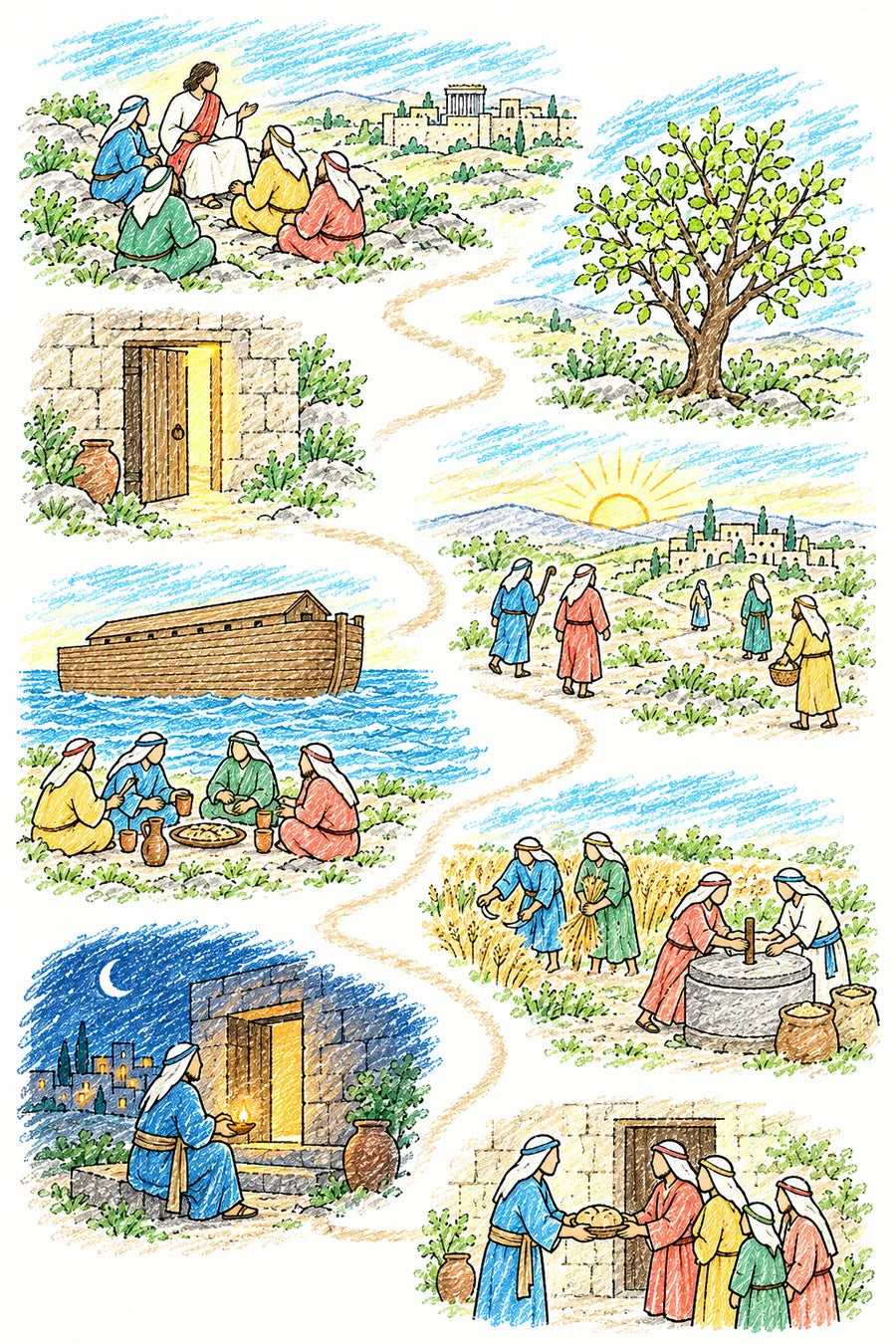
Eight stops from His word to the faithful servant. Scroll, or tap a number on the map.
Part 2 of 7
Four scenes: the fig tree, the days of Noah, the field and the household. Look for the Savior’s promises in each one.
Read it plainly
Tap any dotted word for its meaning. The scripture stays exactly as written.1
Part 3 of 7
Small details tell the story. Some cards are details in the text; others share insights from Church leaders, Church resources or outside sources. Each card says which.
All nine. The fig tree, the door, the sunrise, the ark, the field, the mill, the lamp, the house and His word. Joseph Smith—Matthew 1:37–50
Part 4 of 7
Worried, treasuring His word, distracted, or watching. Which feels most like you right now?
A next step for you
Your choice is saved only on this device.
Try it
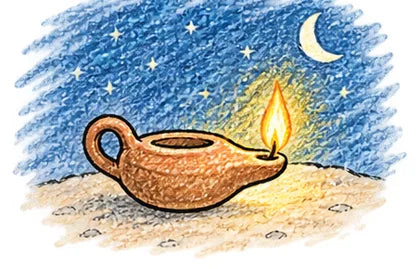
The faithful servant stayed ready. Press and hold to keep your lamp burning, and read His promises as you watch.
“Watch, therefore, for you know not at what hour your Lord doth come.” Joseph Smith—Matthew 1:46
Part 5 of 7
A little background on the Mount of Olives, Joseph Smith—Matthew and two Greek words helps the teaching come alive. Outside sources are labeled.
Matthew 24–25 “contain what is sometimes called the Olivet Discourse, so named because the Savior delivered it on the Mount of Olives.”3
Taught days before Gethsemane.
The disciples asked when the temple would be destroyed, and “What shall be the sign of thy coming, and of the end of the world?”3
He answered both.
The Joseph Smith Translation of Matthew 24 helps “clearly separate the answers to the two questions.”3
A restored clarity.
“Much of what Jesus taught in the Olivet Discourse was to prepare His disciples, both then and now, so they would not be deceived and overcome by evil.”3
Preparation, not fear.
Word study · Greek
suké συκῆ · “fig tree” (Matthew 24:32)
Word study · Greek
grégoreó γρηγορέω · “watch” (Matthew 24:42)
Part 6 of 7
He will come again in glory. Until then, He invites us to treasure His word, watch and serve.
“These are days of great opportunity and important responsibilities. These are your days.”
Elder Neil L. Andersen4“The Lord has set His hand to prepare the world for His glorious return.”
“By using the analogy of the fig tree, Jesus refrained from specifying the exact day or the hour when He would return.”
“He taught that He would return in the season when the promised signs are shown.”
The disciples
“What is the sign of thy coming, and of the end of the world, or the destruction of the wicked, which is the end of the world?” Joseph Smith—Matthew 1:4
Jesus
“Therefore be ye also ready, for in such an hour as ye think not, the Son of Man cometh.” Joseph Smith—Matthew 1:48
Part 7 of 7
A question to ask in prayer
Lord, what would Thou have me be doing when Thou comest? Joseph Smith—Matthew 1:50
Ask, then start doing it today.
One way to watch and be ready each day. It saves on this device, one day at a time.
0 of 7 today
Seven days of watching. Come again tomorrow.
A quiet moment
“Even at the doors.”
Read Joseph Smith—Matthew 1:37–50 slowly. Picture the fig tree putting out its first leaves. Then think of one thing you would want Him to find you doing when He comes. Joseph Smith—Matthew 1:37–50
A verse to hold
Talk about it
For adults and deeper study
Longer readings, harder questions, and where to study next. Each one says what it is before you click.
How young people help prepare the world for the Savior’s return.4
Read the talk →The Olivet Discourse, the two questions and the parable of the fig tree.3
Read the chapter →Read the whole chapter and compare it with Matthew 24.1,2
Joseph Smith—Matthew 1 → Matthew 24 →The Lord repeats the parable of the fig tree for our day.1
Doctrine and Covenants 45 →Every quotation, gloss, and piece of background on this page is listed here: scripture first, then Church sources, then outside scholarship (labeled).
Quotations checked against the linked pages on October 11, 2026. Scripture is quoted from the King James Version as published in the Gospel Library.
He will come again. Until then, He invites us to treasure His word, watch, and be found doing good. Joseph Smith—Matthew 1:38
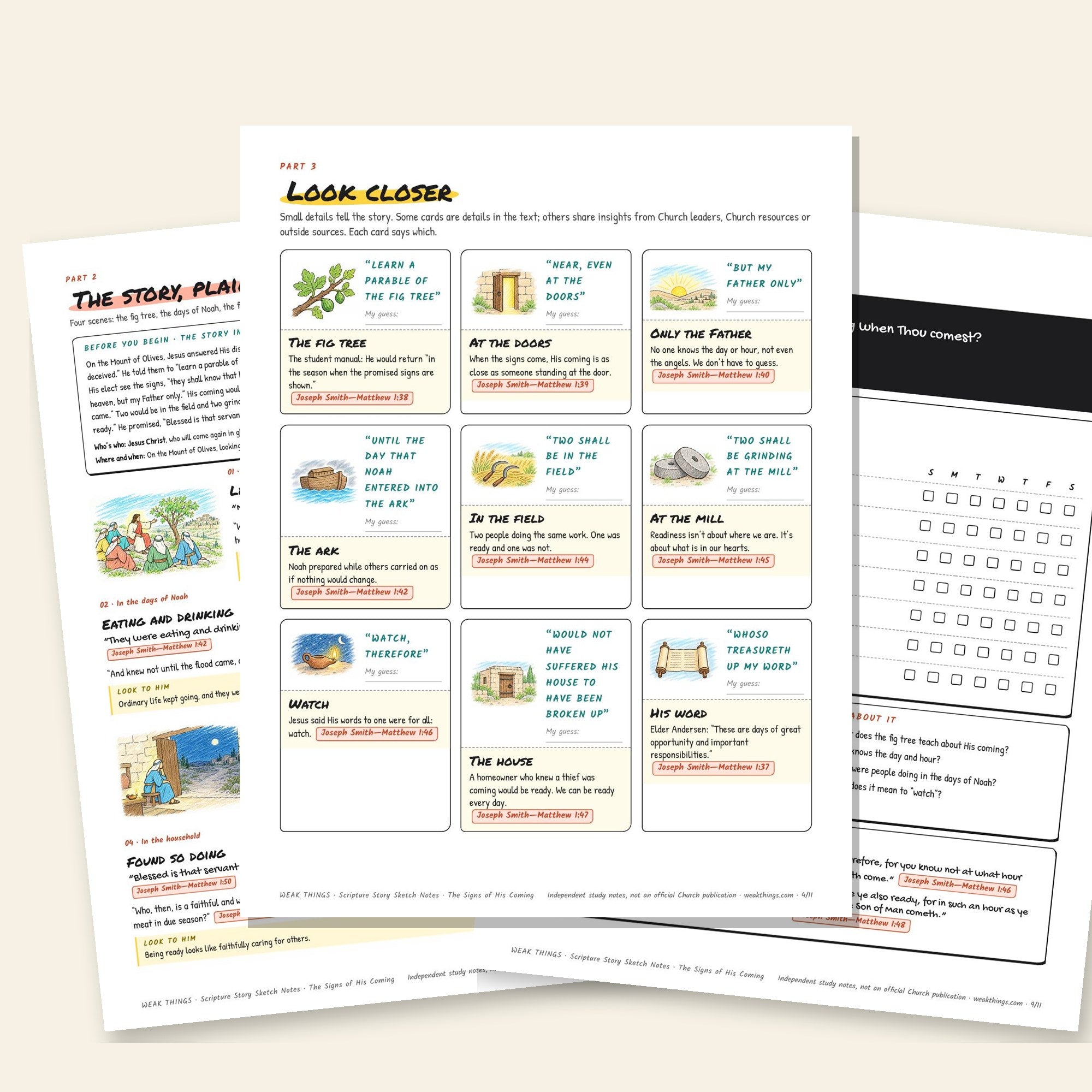
Printable sketch notes
Everything on this page as a 11-page letter-size PDF: the map, scenes, cards, activity, word studies, tracker, Go deeper and sources. For home, class or a quiet Sunday.
More stories
The Signs of His Coming is part of the Scripture Story Sketch Notes for the New Testament, set alongside Come, Follow Me for May 17–23, 2027 (Joseph Smith—Matthew; Matthew 24–25; Mark 12–13; Luke 21).
See every story See all 2027 weeksIndependent study notes from Weak Things, not an official publication of The Church of Jesus Christ of Latter-day Saints. Scripture quotations are from the King James Version. The words are in Joseph Smith—Matthew 1:37–50; the insights in “Look closer” are labeled by source.