Elder Jeffrey R. Holland, “The Tongue of Angels” (2007)
How our words shape our families, our faith and ourselves, and how to speak with “the tongue of angels.”6
Read the talk →Scripture Story Sketch Notes · James 3
“Even so the tongue is a little member, and boasteth great things. Behold, how great a matter a little fire kindleth!” James 3:5
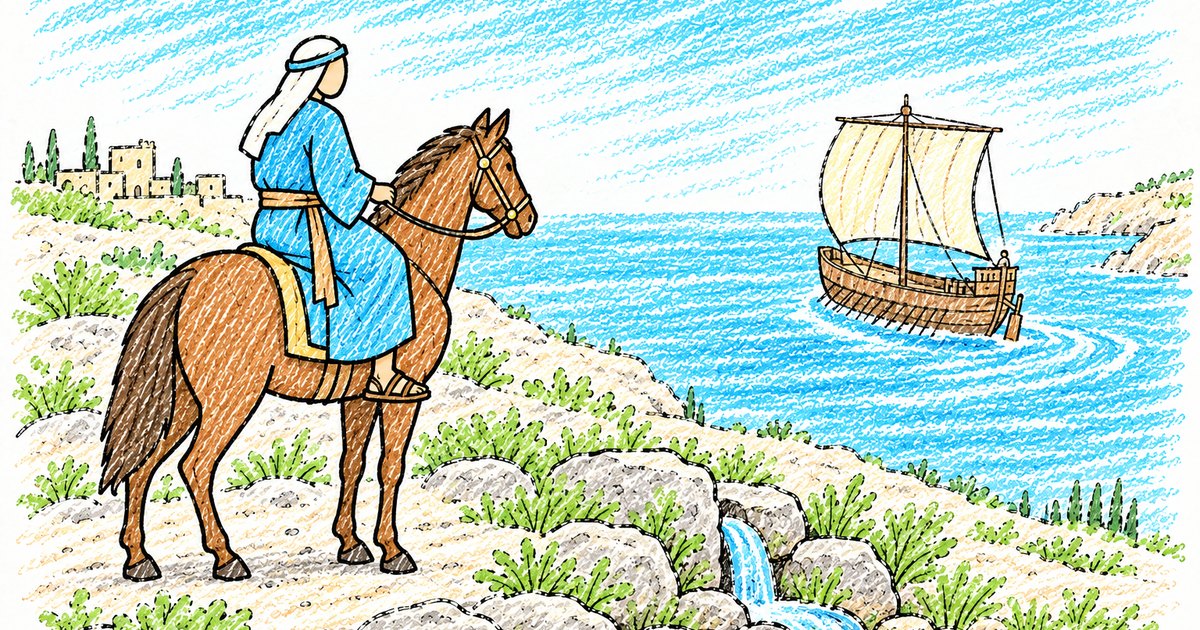
James used three everyday pictures, a horse’s bit, a ship’s rudder and a spark, to show how much power our words have. Then he pointed to wisdom from above, the gentle, peaceable way Jesus speaks.
Before you begin
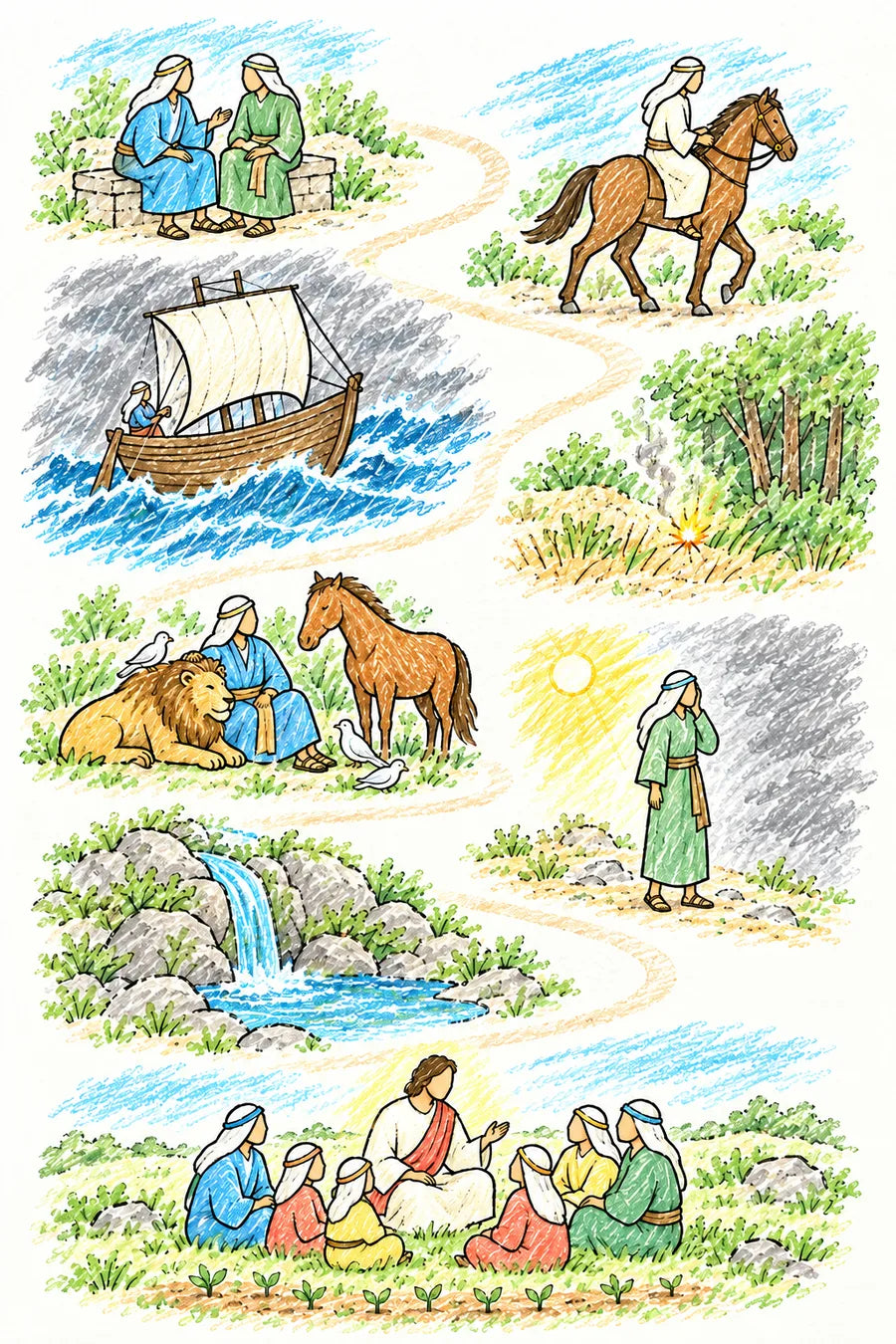
James taught, “If any man offend not in word, the same is a perfect man, and able also to bridle the whole body.” He gave three pictures. “We put bits in the horses’ mouths, that they may obey us.” Great ships “driven of fierce winds” are “turned about with a very small helm.” And “behold, how great a matter a little fire kindleth!”
People have tamed every kind of animal, “but the tongue can no man tame.” “Out of the same mouth proceedeth blessing and cursing. My brethren, these things ought not so to be.” Then James described a better way: “The wisdom that is from above is first pure, then peaceable, gentle,” and “the fruit of righteousness is sown in peace of them that make peace.”
A letter to Christians scattered across the Roman world.
Watch how small things in each picture steer, turn or spread.
Read it yourself: James 3:1–18
Part 1 of 7
Eight stops from a bridled tongue to seeds of peace. Scroll, or tap a number on the map.
Part 2 of 7
Four pictures: a bit, a helm, a spark and a spring. Look for the Savior in each one.
Read it plainly
Tap any dotted word for its meaning. The scripture stays exactly as written.1
Part 3 of 7
Small details tell the story. Some cards are details in the text; others share insights from Church leaders or Church resources. Each card says which.
All nine. The bit, the rudder, the spark, the lion, the fountain, the fig, the olive, the seed and the heart. James 3
Part 4 of 7
Words that hurt, wishing I hadn’t, learning to pause, or words that build. Which feels most like you right now?
A next step for you
Your choice is saved only on this device.
Try it
Words can build people up or spread like fire. Sort each one.
“How great a matter a little fire kindleth!” James 3:5
Part 5 of 7
A little background helps us see the pictures James chose and why. Outside sources are labeled.
James “compared the mouth and the tongue to a horse’s bit, a ship’s rudder, fire, and poison.”8
Small things with big power.
Jesus taught: “that which cometh out of the mouth, this defileth a man.”3
Words show what is in the heart.
Nephi: angels “speak by the power of the Holy Ghost; wherefore, they speak the words of Christ.”5
Our words can be His.
In Nazareth, people “wondered at the gracious words which proceeded out of his mouth.”4
Jesus shows us how to speak.
Word study · Greek
chalinos χαλινός · “bits” (James 3:3)
Word study · Greek
pēdalion πηδάλιον · “helm” (James 3:4)
What the text does not say
James doesn’t say our words are always harmful. Elder Jeffrey R. Holland: “Obviously James doesn’t mean our tongues are always iniquitous.” The same voice that can wound can also pray, bless and testify of Christ.6
Part 6 of 7
People marveled at Jesus’s gracious words. He can teach us to speak the way He does.
“Our words, like our deeds, should be filled with faith and hope and charity.”
Elder Jeffrey R. Holland6“With such words, spoken under the influence of the Spirit, tears can be dried, hearts can be healed, lives can be elevated, hope can return, confidence can prevail.”
“His true disciples build, lift, encourage, persuade, and inspire—no matter how difficult the situation.”
“How we speak to and about others at home, at church, at work, and online really matters.”
Nephi
“Angels speak by the power of the Holy Ghost; wherefore, they speak the words of Christ. Wherefore, I said unto you, feast upon the words of Christ.” 2 Nephi 32:3
Paul
“And be ye kind one to another, tenderhearted, forgiving one another, even as God for Christ’s sake hath forgiven you.” Ephesians 4:32
Part 7 of 7
A question to ask in prayer
Whose day could my words change this week, and what should I say? James 3:18
Ask Him to help you bridle your tongue and to show you who needs a kind word. Then say it.
One kind word each day. It saves on this device, one day at a time.
0 of 7 today
Seven days of words that build. Come again tomorrow.
A quiet moment
“Sown in peace.”
Read James 3:17–18 slowly. Think of one word or phrase you say often. Is it sweet water or bitter? Ask the Savior to help you change one thing. James 3:17–18
A verse to hold
Talk about it
For adults and deeper study
Longer readings, harder questions, and where to study next. Each one says what it is before you click.
How our words shape our families, our faith and ourselves, and how to speak with “the tongue of angels.”6
Read the talk →True disciples of Jesus Christ build, lift and encourage, at home, at church and online.7
Read the talk →Background on James 3, the tongue, and wisdom from above.8
Read the chapter →Paul’s counsel on speech that builds others up, ending with forgiveness through Christ.2
Ephesians 4 →Every quotation, gloss, and piece of background on this page is listed here: scripture first, then Church sources, then outside scholarship (labeled).
Quotations checked against the linked pages on October 11, 2026. Scripture is quoted from the King James Version as published in the Gospel Library.

Small words can steer a life. Let the Savior guide yours, and plant peace wherever you speak. James 3:18
Printable sketch notes
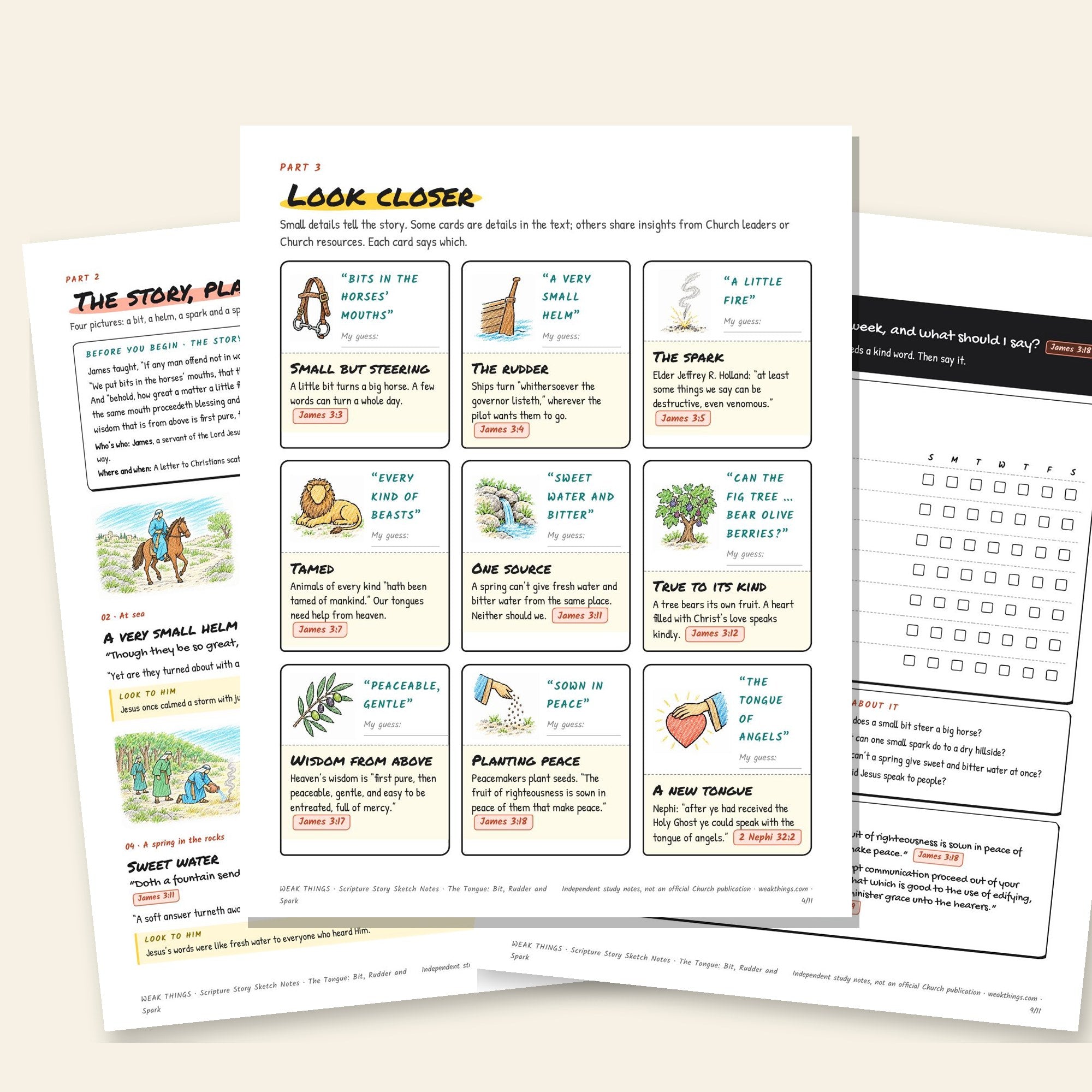
Everything on this page as a 11-page letter-size PDF: the map, scenes, cards, activity, word studies, tracker, Go deeper and sources. For home, class or a quiet Sunday.
More stories
The Tongue: Bit, Rudder and Spark is part of the Scripture Story Sketch Notes for the New Testament, set alongside Come, Follow Me for November 8–14, 2027 (James).
See every story See all 2027 weeksIndependent study notes from Weak Things, not an official publication of The Church of Jesus Christ of Latter-day Saints. Scripture quotations are from the King James Version. The teachings are in James 3; the insights in “Look closer” are labeled by source.