President Dieter F. Uchtdorf, “The Gift of Grace” (2015)
How grace unlocks the gates of heaven and opens its windows, and how weak things become strong.4
Read the talk →Scripture Story Sketch Notes · 2 Corinthians 11:23–28; 2 Corinthians 12:1–10
“My grace is sufficient for thee: for my strength is made perfect in weakness.” 2 Corinthians 12:9
Shipwrecks, beatings, a vision of heaven and a thorn that would not go away. Paul prayed three times, and the Lord answered with grace.
Before you begin
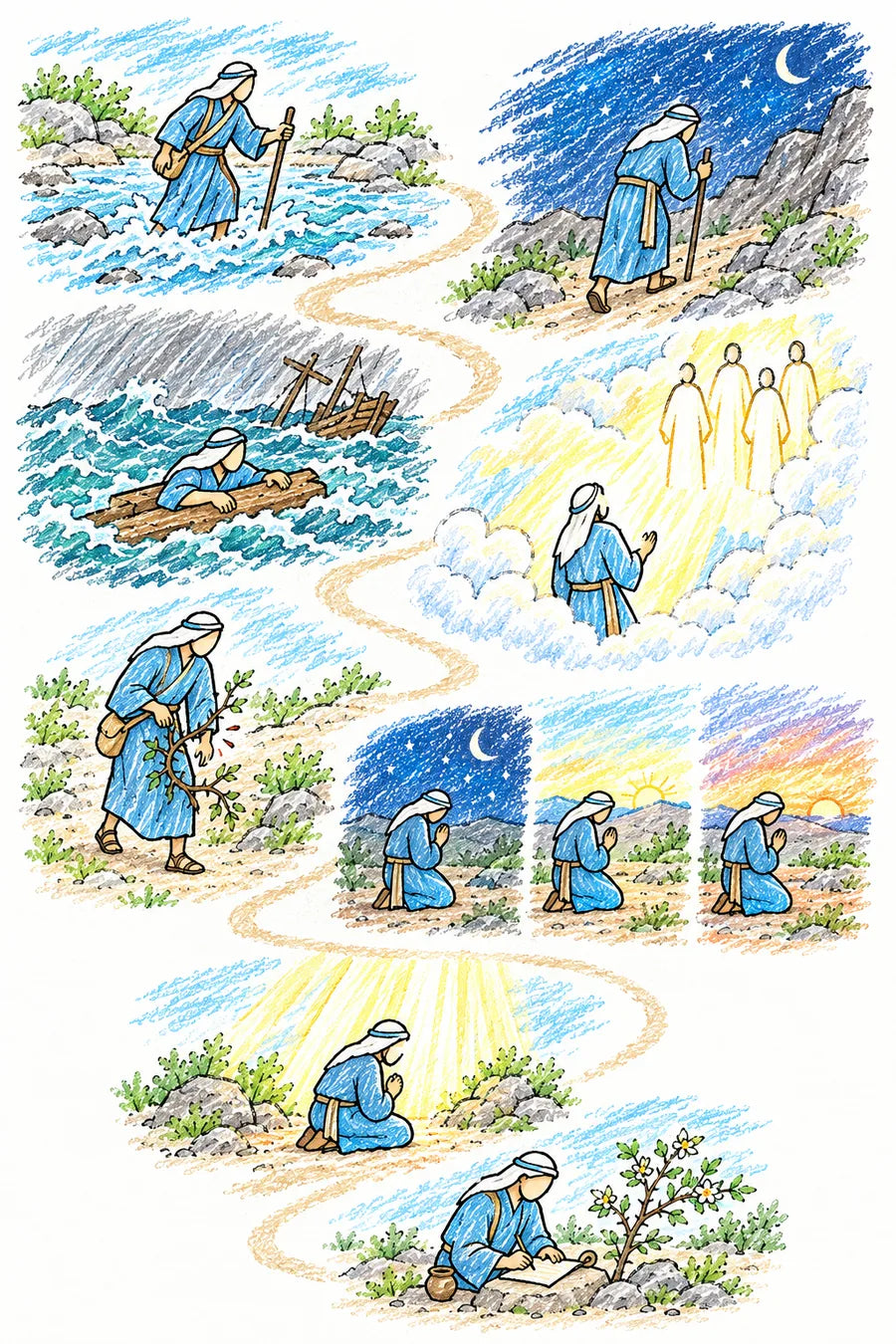
Some in Corinth were following teachers who bragged about their own greatness. Paul answered by “boasting” in a surprising way: he listed his sufferings. He had been beaten with rods, stoned once, shipwrecked three times, and had faced perils of waters, robbers, hunger, cold and weariness. He had also been “caught up to the third heaven” and heard things too sacred to speak.
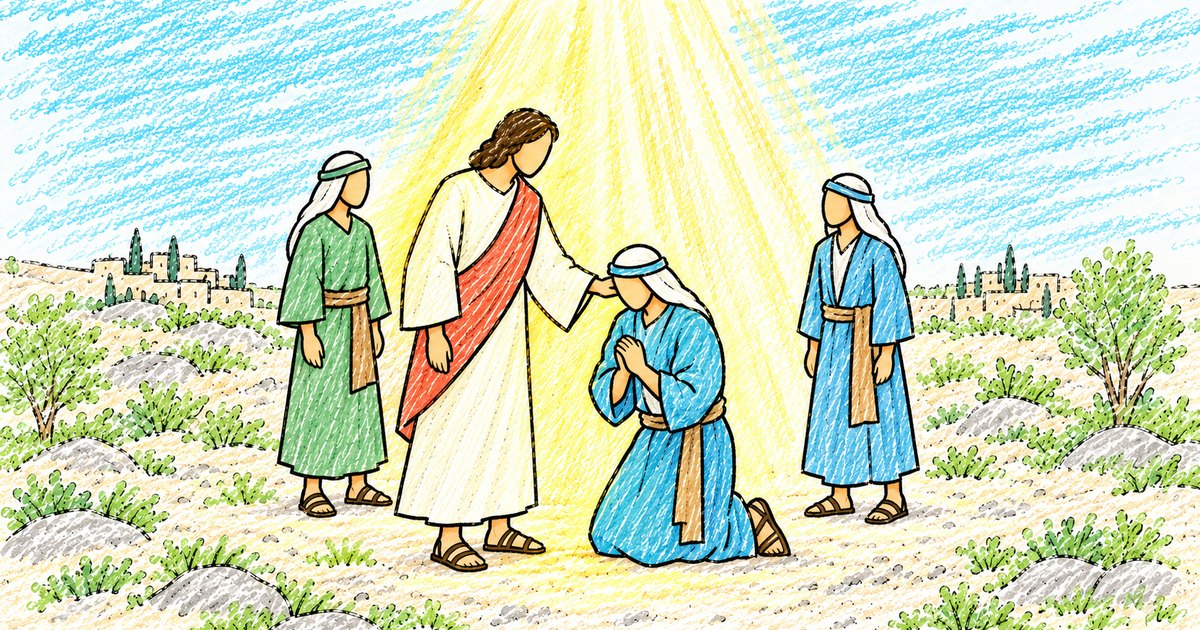
Then Paul shared something very personal. “There was given to me a thorn in the flesh … lest I should be exalted above measure.” Three times he begged the Lord to take it away. The Lord did not. Instead He said, “My grace is sufficient for thee: for my strength is made perfect in weakness.” Paul’s whole view changed: “Most gladly therefore will I rather glory in my infirmities, that the power of Christ may rest upon me … for when I am weak, then am I strong.”
Paul’s travels by land and sea, and his letter to Corinth.
Watch how the Lord answers Paul’s prayer with grace instead of removal.
Read it yourself: 2 Corinthians 12:1–10
Part 1 of 7
Eight stops from Paul’s perils to the flowers among the thorns. Scroll, or tap a number on the map.
Part 2 of 7
Four scenes: the perils, the prayers, the answer and the strength. Look for the Savior in each one.
Read it plainly
Tap any dotted word for its meaning. The scripture stays exactly as written.1
Part 3 of 7
Small details tell the story. Some cards are details in the text; others share insights from prophets, Church resources or a labeled outside lexicon. Each card says which.
All nine. The thorn, the clouds, the three prayers, the light, the reed, the sapling, the tent, the rock and the flower. 2 Corinthians 12:1–10
Part 4 of 7
Praying for it to go away, worn down, comparing my weakness, or strong in Him. Which feels most like you right now?
A next step for you
Your choice is saved only on this device.
Try it
Paul asked the Lord three times to take his thorn away. Tap each card to see what happened next, and how weakness became strength.
“For when I am weak, then am I strong.” 2 Corinthians 12:10
Part 5 of 7
A little background helps us see what Paul was facing. Outside sources are labeled.
The student manual: commentators have proposed “epilepsy, a serious visual impairment … or malaria.”6
Paul never says.
“One of the positive results of this affliction was that it helped Paul avoid becoming proud.”6
Weakness can lead to humility.
President Oaks: priesthood blessings “are limited by the will of Him whose priesthood it is.”6
Faith trusts His answer.
Beaten, stoned, shipwrecked, “in hunger and thirst, in fastings often, in cold and nakedness.”2
Paul knew hardship.
Word study · Greek
skolops σκόλοψ · “thorn” (2 Corinthians 12:7)
Word study · Greek
arkeō ἀρκέω · “is sufficient” (2 Corinthians 12:9)
Word study · Greek
episkēnoō ἐπισκηνόω · “rest upon” (2 Corinthians 12:9)
What the text does not say
The story does not say Paul’s thorn came because he lacked faith. He was an Apostle who had seen the third heaven. The Lord’s answer was grace, not blame.1
Part 6 of 7
His grace is sufficient. His strength is made perfect in our weakness.
The Lord’s answer: “My grace is sufficient for thee.”
2 Corinthians 12:91“He wants you to learn how to be cured when that is His will and how to obtain strength to live with your challenge when He intends it to be an instrument for growth.”
“The grace of God is our great and everlasting hope.”
“This is a gospel of grand expectations, but God’s grace is sufficient for each of us.”
Moroni
“I give unto men weakness that they may be humble; and my grace is sufficient for all men that humble themselves before me.” Ether 12:27
Matthew
“A bruised reed shall he not break, and smoking flax shall he not quench.” Matthew 12:20
Part 7 of 7
A question to ask in prayer
What do You want me to learn from my thorn? 2 Corinthians 12:9
Elder Robert D. Hales asked, “What lessons dost Thou want me to learn from these experiences?” Ask the same, and write what comes.
One step each day. It saves on this device, one day at a time.
0 of 7 today
Seven days leaning on His grace. Come again tomorrow.
A quiet moment
“Sufficient for thee.”
Read 2 Corinthians 12:7–10 slowly. Then bring your own thorn to the Savior and thank Him that His grace is enough for you. 2 Corinthians 12:7–10
A verse to hold
Talk about it
For adults and deeper study
Longer readings, harder questions, and where to study next. Each one says what it is before you click.
How grace unlocks the gates of heaven and opens its windows, and how weak things become strong.4
Read the talk →Paced progress, honest inventories of our strengths, and grace sufficient for each of us.5
Read the talk →The thorn in the flesh, healing and God’s will, and taking pleasure in infirmities.6
Read the chapter →Moroni worries about his weakness in writing, and the Lord answers with the promise of Ether 12:27.3
Read Ether 12 →Every quotation, gloss, and piece of background on this page is listed here: scripture first, then Church sources, then outside scholarship (labeled).
Quotations checked against the linked pages on October 10, 2026. Scripture is quoted from the King James Version as published in the Gospel Library.
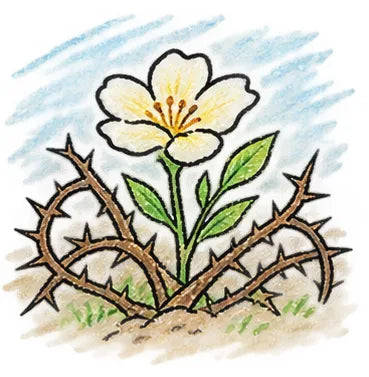
His strength is made perfect in our weakness. 2 Corinthians 12:9
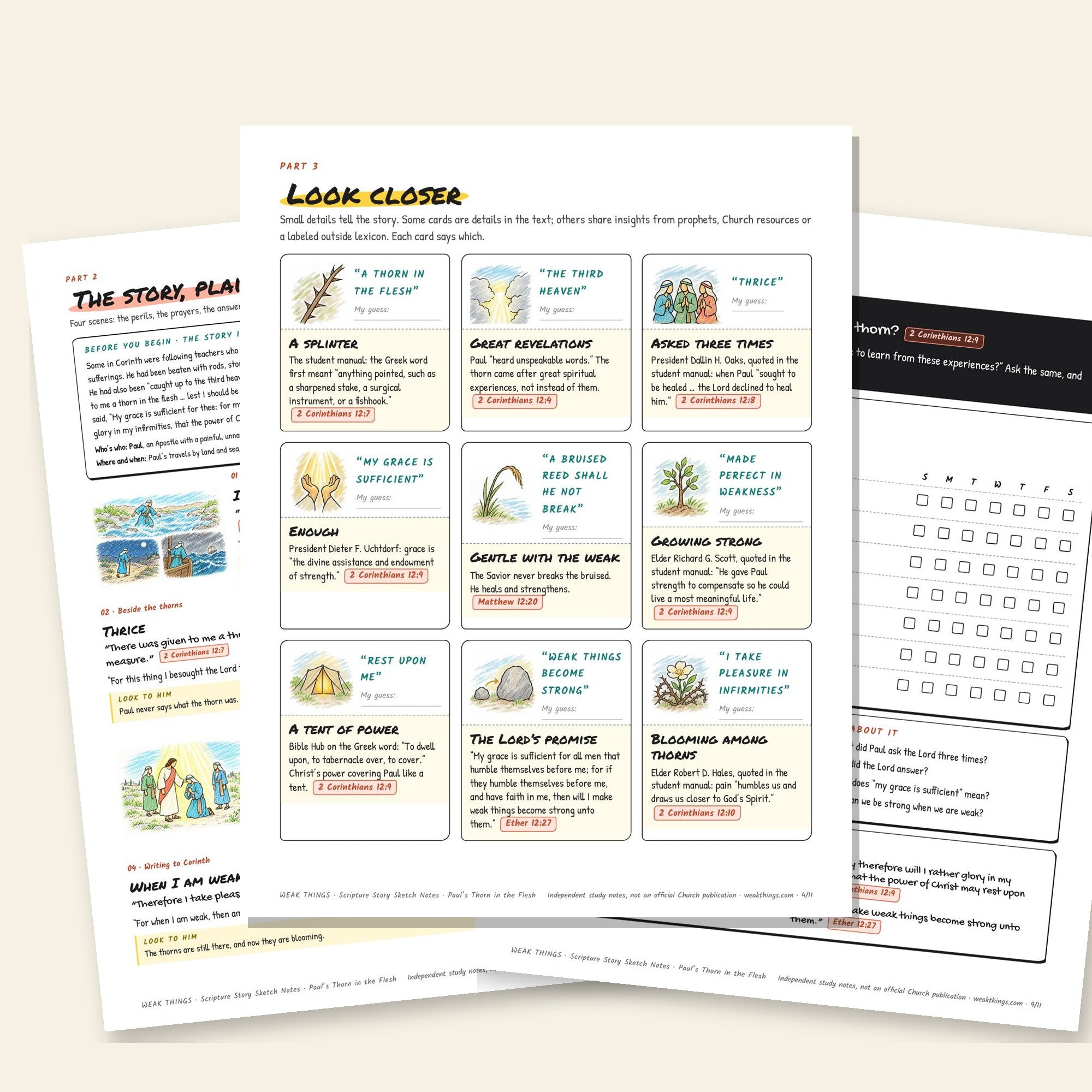
Printable sketch notes
Everything on this page as a 11-page letter-size PDF: the map, scenes, cards, activity, word studies, tracker, Go deeper and sources. For home, class or a quiet Sunday.
More stories
Paul’s Thorn in the Flesh is part of the Scripture Story Sketch Notes for the New Testament, set alongside Come, Follow Me for September 13–19, 2027 (2 Corinthians 8–13).
See every story See all 2027 weeksIndependent study notes from Weak Things, not an official publication of The Church of Jesus Christ of Latter-day Saints. Scripture quotations are from the King James Version. The story is told in 2 Corinthians 11 and 12; the insights in “Look closer” are labeled by source.