Elder Jeffrey R. Holland, “Are We Not All Beggars?” (2014)
Our duty to the poor, King Benjamin’s question, and why rich or poor we “do what we can.”4
Read the talk →Scripture Story Sketch Notes · 2 Corinthians 8–9
“Every man according as he purposeth in his heart, so let him give; not grudgingly, or of necessity: for God loveth a cheerful giver.” 2 Corinthians 9:7
The Saints in Jerusalem were hungry. Poor Saints in Macedonia gave beyond their power, and Paul invited Corinth to give too, because Jesus gave first.
Before you begin
The Saints in Jerusalem were poor and hungry, and Paul was gathering a collection for them from the branches he had founded. The Saints in Macedonia were poor themselves and in “a great trial of affliction,” yet they begged to give, and gave “beyond their power,” because they “first gave their own selves to the Lord.” Paul reminded the Corinthians of the Savior: “though he was rich, yet for your sakes he became poor, that ye through his poverty might be rich.”
Then he taught them how to give. “He which soweth sparingly shall reap also sparingly; and he which soweth bountifully shall reap also bountifully.” Each person should give “as he purposeth in his heart … not grudgingly, or of necessity: for God loveth a cheerful giver.” Their gifts would feed the Saints in Jerusalem and bring “many thanksgivings unto God.” Paul ended, “Thanks be unto God for his unspeakable gift.”
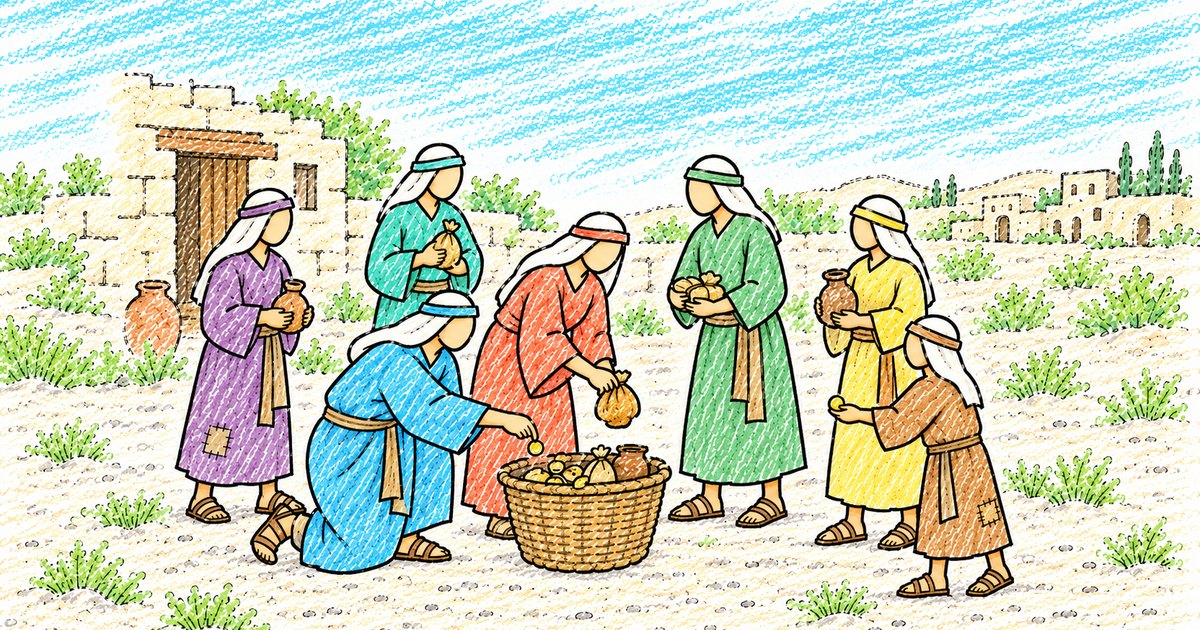
The branches of Macedonia and Achaia, with the gift carried to Jerusalem.
Watch how every gift points back to the Savior’s gift.
Read it yourself: 2 Corinthians 8:1–9; 2 Corinthians 9:6–15
Part 1 of 7
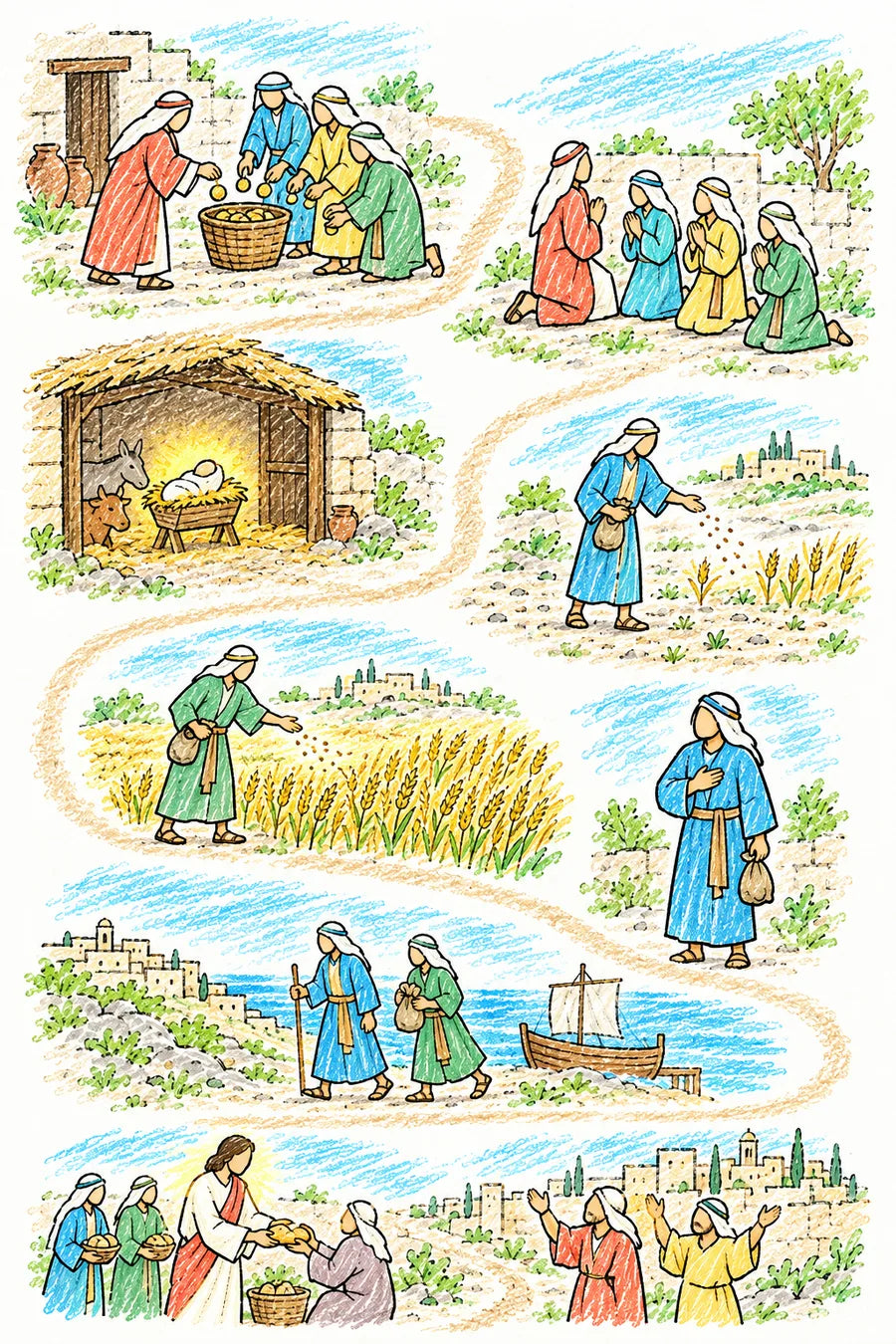
Eight stops following one gift from Macedonia to Jerusalem. Scroll, or tap a number on the map.
Part 2 of 7
Four scenes: the Macedonians, the two fields, the journey and the thanks. Look for the Savior in each one.
Read it plainly
Tap any dotted word for its meaning. The scripture stays exactly as written.2
Part 3 of 7
Small details tell the story. Some cards are details in the text; others share insights from Church leaders or Church resources. Each card says which.
All nine. The pinch, the field, the heart, the sun, the basket, the coins, the bread, the manger and the raised hands. 2 Corinthians 9:6–15
Part 4 of 7
I don’t have much, giving grudgingly, I have plenty, or giving with joy. Which feels most like you right now?
A next step for you
Your choice is saved only on this device.
Try it
Paul described how to give: decide in your heart, give willingly, and give cheerfully. Tap the things you’ll try this week and watch each one grow.
“Every man according as he purposeth in his heart, so let him give.” 2 Corinthians 9:7
Part 5 of 7
A little background helps us see Paul’s collection for the poor. Outside sources are labeled.
The student manual: “One of Paul’s ongoing efforts during his missions was to gather a collection for the poor in Jerusalem.”5
See Romans 15:25–26.
“The willingness to give what one can is more important than being able to give in great abundance.”5
A small gift can be a great one.
“Equality is determined in consideration of each person’s needs, wants, and circumstances.”5
Not sameness, but care.
“In modern times, one way members of the Church make donations for the poor is through fast offerings.”5
Paul’s collection continues today.
Word study · Greek
hilaros ἱλαρός · “cheerful” (2 Corinthians 9:7)
Word study · Greek
dōrea δωρεά · “gift” (2 Corinthians 9:15)
What the text does not say
The story does not say only the rich can give. The poorest Saints, in Macedonia, gave “beyond their power,” and Paul says a gift is accepted “according to that a man hath.”1
Part 6 of 7
He was rich and became poor for us. Every gift we give follows His.
Elder Holland’s question: “Are we not all beggars?”
Elder Jeffrey R. Holland4“Don’t we all cry out for help and hope and answers to prayers?”
“Our spiritual progress is inseparably bound together with the temporal service we give to others.”
“I am my brother’s brother.”
Paul
“For ye know the grace of our Lord Jesus Christ, that, though he was rich, yet for your sakes he became poor, that ye through his poverty might be rich.” 2 Corinthians 8:9
Mormon
“For if he offereth a gift, or prayeth unto God, except he shall do it with real intent it profiteth him nothing.” Moroni 7:6
Part 7 of 7
A question to ask in prayer
Who needs what I have? 2 Corinthians 8:14
Ask Heavenly Father to bring one person to mind who needs something you can give: time, money, attention or skill. Then purpose in your heart to give it.
One step each day. It saves on this device, one day at a time.
0 of 7 today
Seven days of cheerful giving. Come again tomorrow.
A quiet moment
“His unspeakable gift.”
Read 2 Corinthians 8:9 and 2 Corinthians 9:15 slowly. Then thank Jesus Christ for becoming poor so you could be rich, and ask how you can give like Him. 2 Corinthians 8:9
A verse to hold
Talk about it
For adults and deeper study
Longer readings, harder questions, and where to study next. Each one says what it is before you click.
Our duty to the poor, King Benjamin’s question, and why rich or poor we “do what we can.”4
Read the talk →Paul’s collection for Jerusalem, sowing bountifully, and President Uchtdorf on providing in the Lord’s way.5
Read the chapter →King Benjamin’s sermon on imparting to the poor and asking, “Are we not all beggars?”
Read Mosiah 4 →Why a gift must be given “with real intent.”3
Read Moroni 7 →Every quotation, gloss, and piece of background on this page is listed here: scripture first, then Church sources, then outside scholarship (labeled).
Quotations checked against the linked pages on October 10, 2026. Scripture is quoted from the King James Version as published in the Gospel Library.

He gave first. We give because of Him. 2 Corinthians 9:7
Printable sketch notes
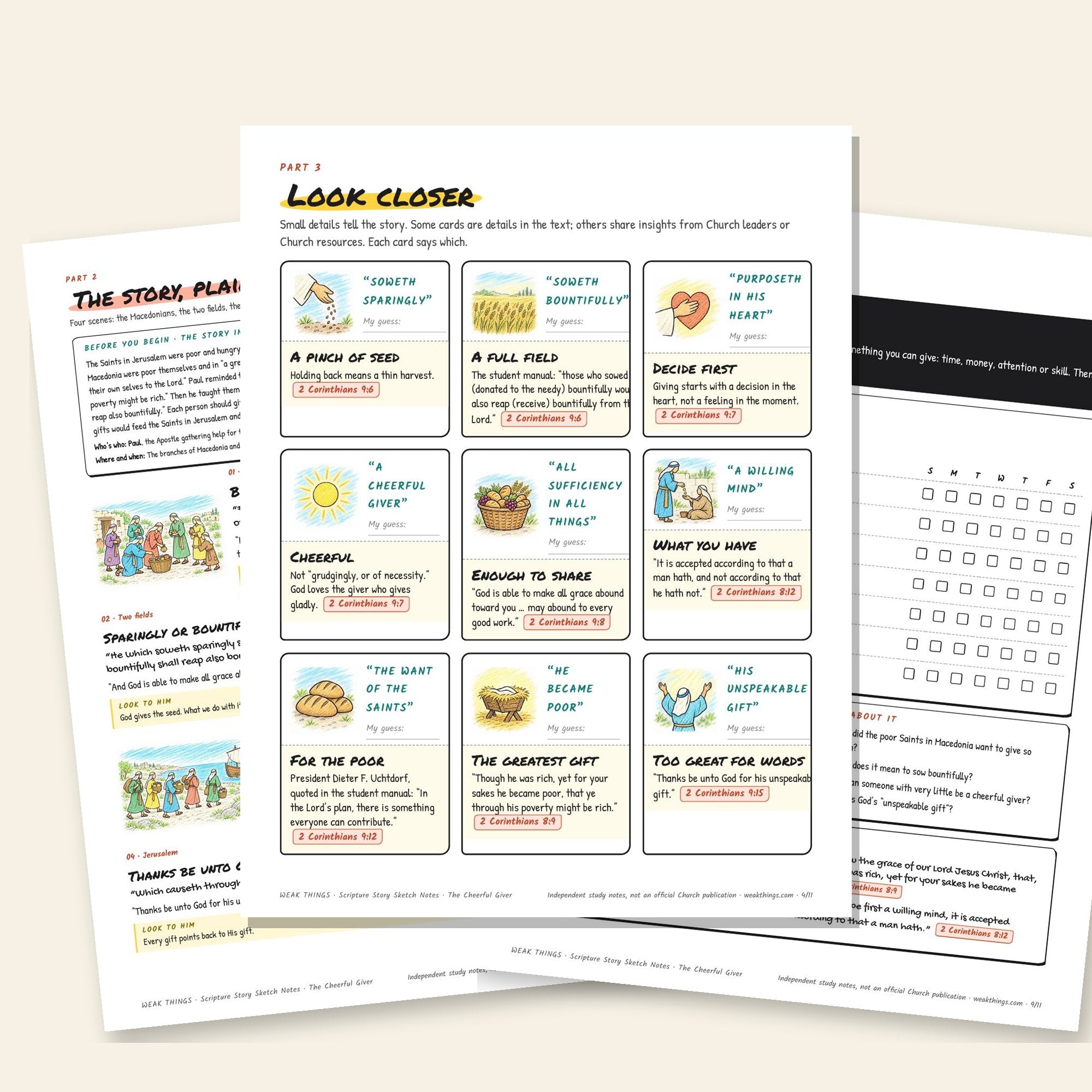
Everything on this page as a 11-page letter-size PDF: the map, scenes, cards, activity, word studies, tracker, Go deeper and sources. For home, class or a quiet Sunday.
More stories
The Cheerful Giver is part of the Scripture Story Sketch Notes for the New Testament, set alongside Come, Follow Me for September 13–19, 2027 (2 Corinthians 8–13).
See every story See all 2027 weeksIndependent study notes from Weak Things, not an official publication of The Church of Jesus Christ of Latter-day Saints. Scripture quotations are from the King James Version. The story is told in 2 Corinthians 8 and 9; the insights in “Look closer” are labeled by source.