Elder Dale G. Renlund, “Repentance: A Joyful Choice” (2016)
Why repentance is joyful because of the Savior, and what “repent” really means.3
Read the talk →Scripture Story Sketch Notes · Luke 13:1–17
“Lord, let it alone this year also, till I shall dig about it, and dung it.” Luke 13:8
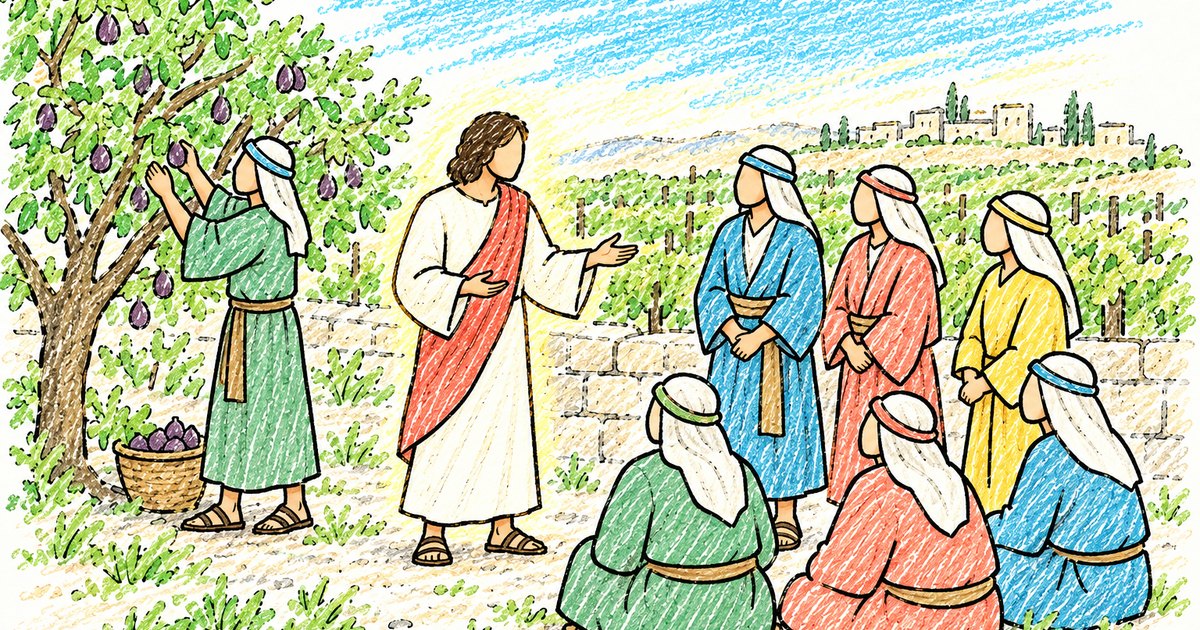
Jesus told of a fig tree with no fruit after three years, and a gardener who asked for one more year to help it grow. Then He set free a woman who had been bent over for eighteen years.
Before you begin
Some people told Jesus about Galileans whom Pilate had killed while they offered sacrifices. Jesus asked if they thought those people were worse sinners, and answered, “I tell you, Nay: but, except ye repent, ye shall all likewise perish.” He said the same of eighteen people killed when the tower in Siloam fell. Then He told a parable: a man came three years looking for fruit on his fig tree, found none, and told the gardener to cut it down.
The gardener answered, “Lord, let it alone this year also, till I shall dig about it, and dung it,” and if it still bore no fruit, it could be cut down. Later, teaching in a synagogue on the Sabbath, Jesus saw a woman who had been bent over for eighteen years. He called her, said “Woman, thou art loosed from thine infirmity,” and laid His hands on her. She stood straight and glorified God. When the synagogue ruler objected, Jesus answered him, and all the people rejoiced.
On the journey toward Jerusalem, and in a synagogue on the Sabbath.
Watch what the gardener asks for and does, and how Jesus sees the woman who was bowed down.
Read it yourself: Luke 13:1–17
Part 1 of 7
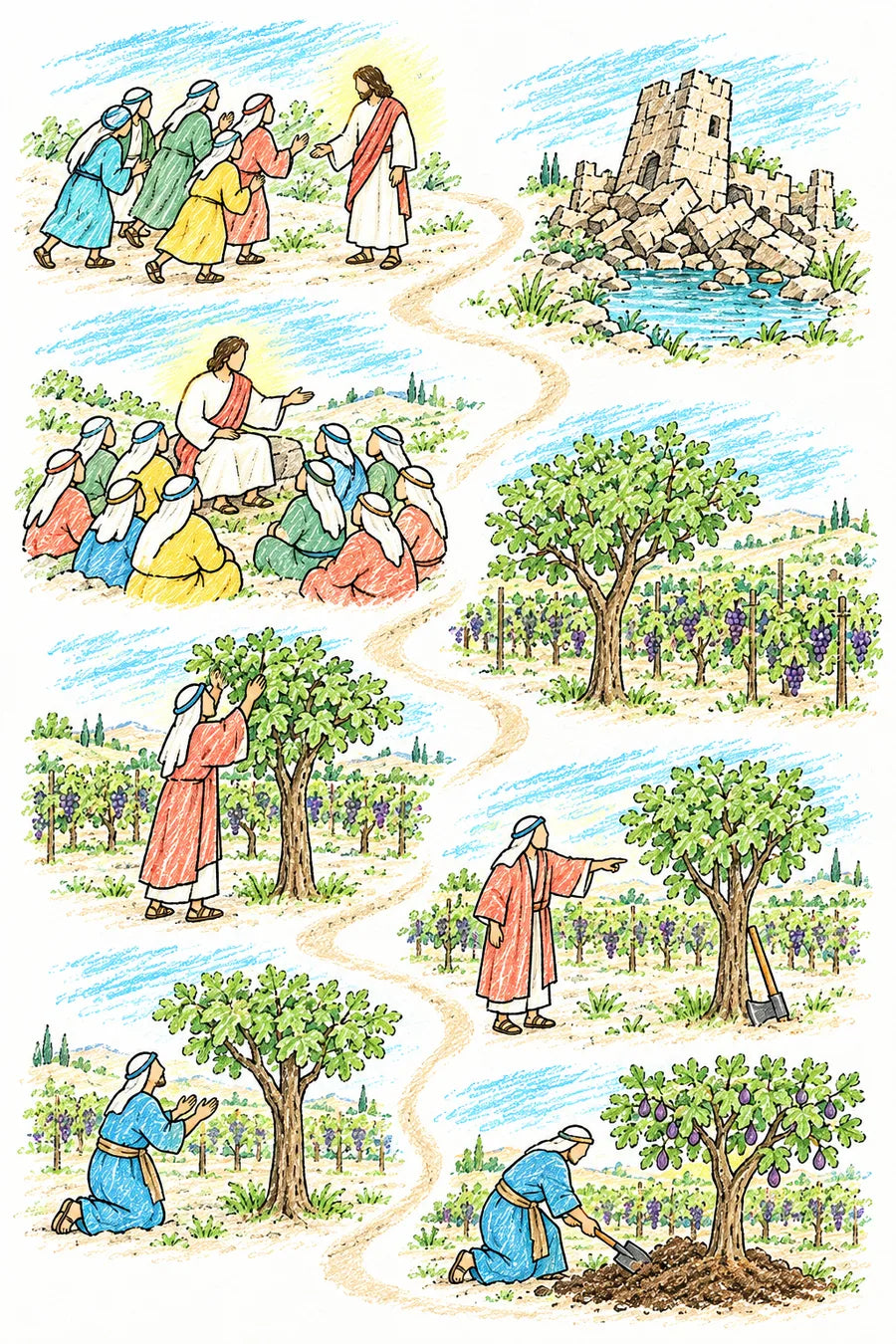
Eight stops from hard news to a tree that bears fruit. Scroll, or tap a number on the map.
Part 2 of 7
Four scenes: the news, the vineyard, the gardener and the woman made straight. Look for the Savior in each one.
Read it plainly
Tap any dotted word for its meaning. The scripture stays exactly as written.1
Part 3 of 7
Small details tell the story. Some cards are details in the text; others share insights from Church leaders, Church resources or outside sources. Each card says which.
All nine. The tower, the leaf, the three suns, the axe, the jar, the spade, the soil, the figs and the woman made straight. Luke 13:1–17
Part 4 of 7
Feeling fruitless, wondering why, being helped up, or bearing fruit. Which feels most like you right now?
A next step for you
Your choice is saved only on this device.
Try it
The Gardener asked for one more year to help the tree. Tap what you’ll do this week, and watch your tree grow toward fruit.
He digs, He nourishes, He waits. We choose to grow.
Part 5 of 7
A little background on the tragedies in Jerusalem, fig trees and the Sabbath healing helps the story come alive. Outside sources are labeled.
Jesus used these events “to challenge the belief that calamities are always punishments from God.” He also emphasized “that all have need of repentance.”2
Everyone needs Him.
The “certain man” represents God, the fig tree represents the Jewish remnant of Israel, and the gardener “represents the Son of God.”2
He is the Gardener.
“He granted a final year for the tree to bear fruit, during which time it had to either produce fruit or be removed from the vineyard.”2
Time to grow is a gift.
From His answer, “we learn the importance of looking for good things we can do on the Sabbath day.”2
He made her free.
Word study · Greek
suké συκῆ · “fig tree” (Luke 13:6)
Word study · Greek
metanoeó μετανοέω · “repent” (Luke 13:3)
What the text does not say
Jesus doesn’t say hard things happen because people are worse than others. He doesn’t say the tree is hopeless, either. He asks for more time, gets to work beside it, and invites everyone to turn to Him.1
Part 6 of 7
He is the Gardener who pleads for more time and works to help us grow. He sees those bowed down and sets them free.
“Real repentance must involve faith in the Lord Jesus Christ, faith that He can change us, faith that He can forgive us, and faith that He will help us avoid more mistakes.”
Elder Dale G. Renlund3“Let us not wait for things to get hard before turning to God.”
“Sweet repentance is part of a daily process.”
“Without the Redeemer, the inherent hope and joy evaporate, and repentance becomes simply miserable behavior modification.”
The woman
“And he laid his hands on her: and immediately she was made straight, and glorified God.” Luke 13:13
The people
“All the people rejoiced for all the glorious things that were done by him.” Luke 13:17
Part 7 of 7
A question to ask in prayer
What fruit wouldst Thou help me grow this year? Luke 13:9
Listen for one fruit: patience, kindness, honesty, faith. Then let Him help you tend it.
One way to let Him tend you each day. It saves on this device, one day at a time.
0 of 7 today
Seven days of growing. Come again tomorrow.
A quiet moment
“Let it alone this year also.”
Read Luke 13:6–13 slowly. Picture the gardener kneeling beside the fruitless tree, asking for more time. Then picture Jesus calling the bowed woman to Him. Luke 13:6–13
A verse to hold
Talk about it
For adults and deeper study
Longer readings, harder questions, and where to study next. Each one says what it is before you click.
Why repentance is joyful because of the Savior, and what “repent” really means.3
Read the talk →Not waiting for hard times to turn to God, and repentance as a daily, joyful process.4
Read the talk →The fallen tower, the barren fig tree and the Sabbath healing, explained.2
Read the chapter →Read the whole chapter opening, from the hard news to the woman made straight.1
Luke 13 →Every quotation, gloss, and piece of background on this page is listed here: scripture first, then Church sources, then outside scholarship (labeled).
Quotations checked against the linked pages on October 11, 2026. Scripture is quoted from the King James Version as published in the Gospel Library.
He is the Gardener who pleads for more time and works beside us. Let Him tend you. Luke 13:9

Printable sketch notes
Everything on this page as a 11-page letter-size PDF: the map, scenes, cards, activity, word studies, tracker, Go deeper and sources. For home, class or a quiet Sunday.
More stories
The Barren Fig Tree is part of the Scripture Story Sketch Notes for the New Testament, set alongside Come, Follow Me for March 15–21, 2027 (Matthew 13; Luke 8; 13).
See every story See all 2027 weeksIndependent study notes from Weak Things, not an official publication of The Church of Jesus Christ of Latter-day Saints. Scripture quotations are from the King James Version. The words are in Luke 13:1–17; the insights in “Look closer” are labeled by source.