President Gordon B. Hinckley, “Forgiveness” (2005)
Why forgiveness may be “the greatest virtue on earth,” with stories of people and nations who forgave, and the prodigal son.4
Read the talk →Scripture Story Sketch Notes · Matthew 18:21–35
“I say not unto thee, Until seven times: but, Until seventy times seven.” Matthew 18:22
A question about counting, a debt too big to pay, a king who forgave it all, and a servant who would not forgive a little. Walk through the story, look closer, and see the King who forgives.
Before you begin
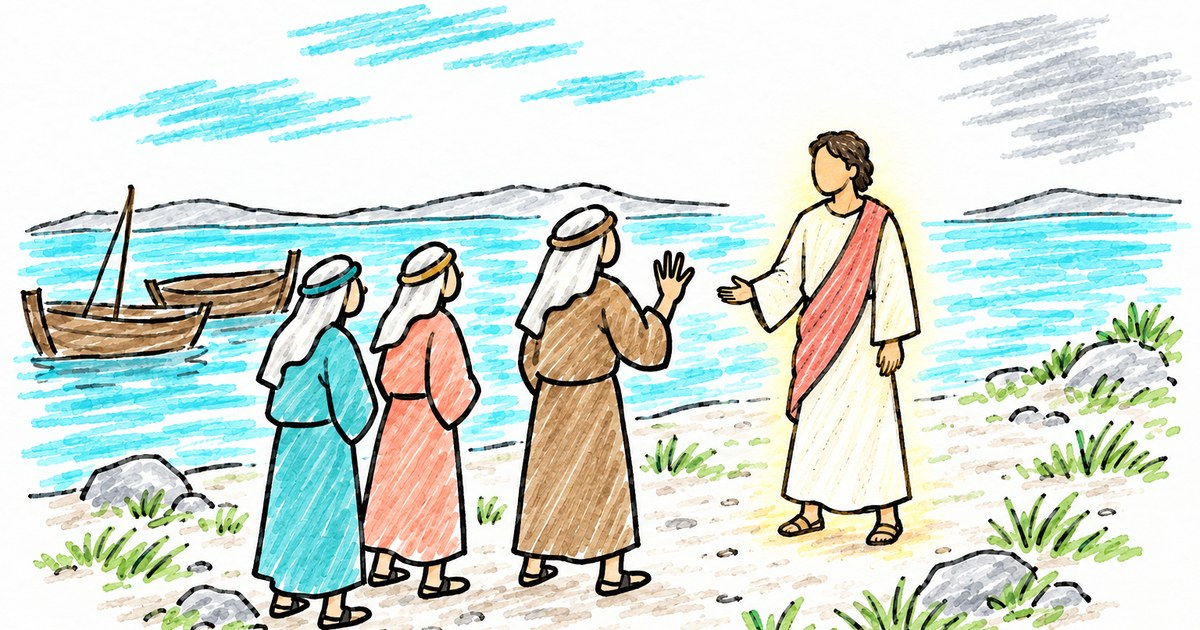
Peter asked Jesus how many times he should forgive his brother. “Till seven times?” Jesus answered, “Until seventy times seven,” and told a story about a king.
A servant owed the king ten thousand talents, far more than he could ever pay. He begged for patience, and the king, moved with compassion, forgave him the whole debt. Then that servant found a fellowservant who owed him an hundred pence, took him by the throat, and had him thrown into prison. When the king heard, he asked, “Shouldest not thou also have had compassion on thy fellowservant, even as I had pity on thee?”
Near Capernaum; the story is set in a king’s court.
Listen for the same words spoken twice: “Have patience with me.”
Read it yourself: Matthew 18:21–35
Part 1 of 7
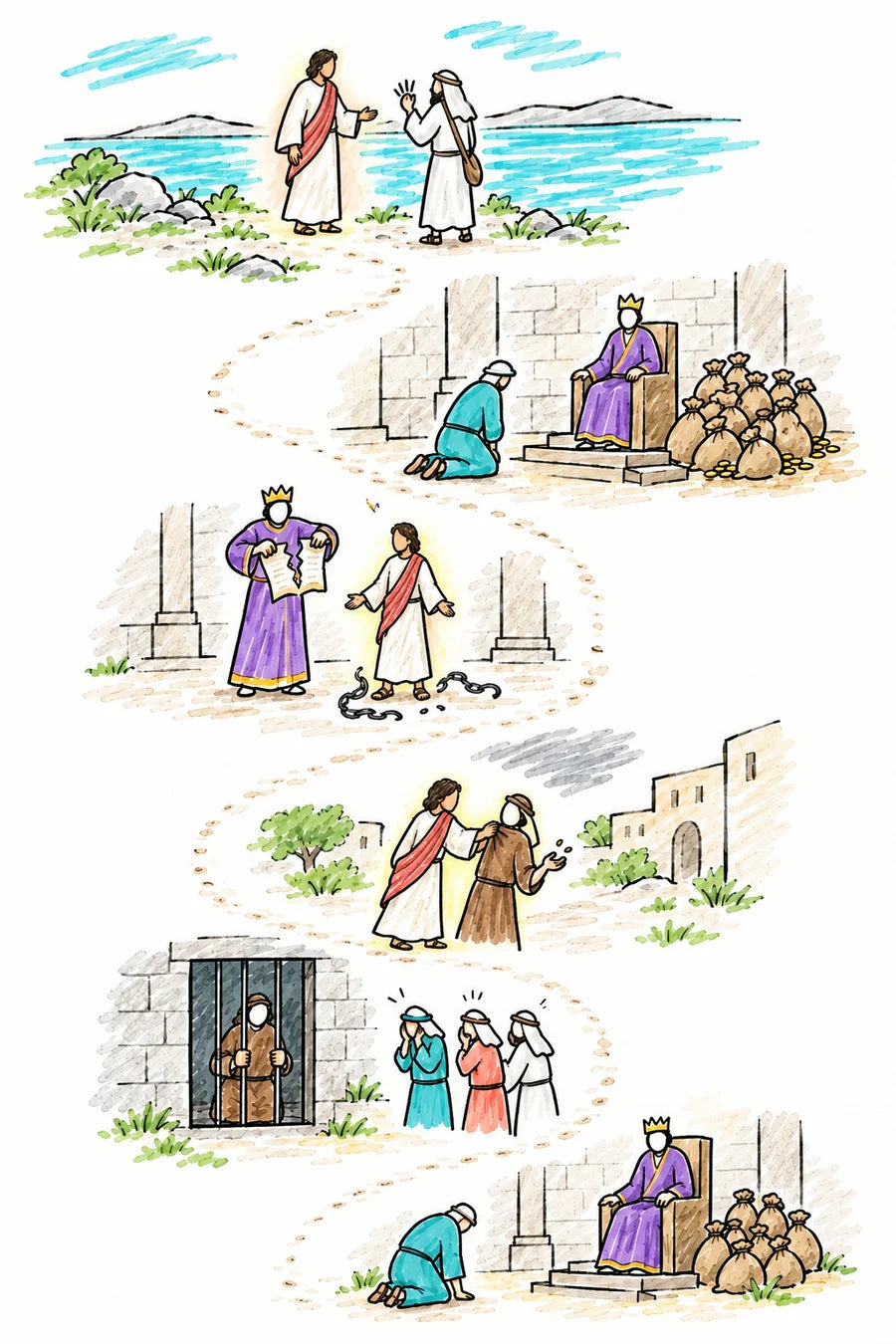
Eight stops from Peter’s question to the king’s answer. Scroll, or tap a number on the map.
Part 2 of 7
Four scenes: the question, the king’s mercy, the servant’s demand, and the king’s question. Look for the Savior in each one.
Read it plainly
Tap any dotted word for its meaning. The scripture stays exactly as written.1
Part 3 of 7
This is a parable. Some cards are details in the text; others share insights from prophets and Church resources. Each card says which.
All nine. Seven times, the account, the talents, kneeling, set free, a hundred pence, the prison, the sorry friends and the heart. Matthew 18:21–35
Part 4 of 7
People in this story kept count, held a debt, forgot what they had been forgiven, or needed mercy. Which feels most like you right now?
A next step for you
Your choice is saved only on this device.
Try it
Two men in this story were owed money. Read each detail and decide: does it describe the king, or the servant he forgave?
“Even as I had pity on thee.” Matthew 18:33
Part 5 of 7
A little background helps us see how big the first debt was and why the second one was so small. Outside sources are labeled.
Elder Talmage: Peter “would fain have some definite limit set,” and “the rabbis prescribed a triple forgiveness only.”6
Seven felt generous. Jesus asked for more.
Elder Talmage: “the Lord intended to present a case of great disparity and striking contrast. The actual amounts involved are of minor significance in the story.”6
What matters is the difference.
The fellowservant pleaded, “Have patience with me, and I will pay thee all.” Elder Talmage: those words “were identical with those of his own prayer to the king.”6
He had prayed them himself that same day.
Word study · Greek
splagchnizomai σπλαγχνίζομαι · “moved with compassion” (Matthew 18:27)
Part 6 of 7
The King in this story forgave more than anyone could pay. That is what the Savior does for us.
President Gordon B. Hinckley: “I think it may be the greatest virtue on earth, and certainly the most needed.”
President Gordon B. Hinckley, “Forgiveness,” October 20054“Somehow forgiveness, with love and tolerance, accomplishes miracles that can happen in no other way.”
“The Lord used the math of seventy times seven as a metaphor of His infinite Atonement, His boundless love, and His limitless grace.”
“This reply must have meant to Peter as it means to us, that to forgiveness man may set no bounds.”
Book of Mormon
“Yea, and as often as my people repent will I forgive them their trespasses against me.” Mosiah 26:30
Gospel of Matthew
“And forgive us our debts, as we forgive our debtors.” Matthew 6:12
Part 7 of 7
His question
“Shouldest not thou also have had compassion on thy fellowservant, even as I had pity on thee?” Matthew 18:33
Elder Robbins: “I am eternally grateful for the loving-kindness, patience, and long-suffering of Heavenly Parents and the Savior, who allow us countless second chances.”5 Whom will you give a second chance this week?
One step of forgiveness a day. It saves on this device, one day at a time.
0 of 7 today
Seven days of forgiving. Come again tomorrow.
A quiet moment
“Then the lord of that servant was moved with compassion, and loosed him, and forgave him the debt.”
Read Matthew 18:23–35 slowly. Then sit in quiet and ask Heavenly Father whom He would like you to forgive, and listen. Matthew 18:23–35
A verse to hold
Talk about it
For adults and deeper study
Longer readings, harder questions, and where to study next. Each one says what it is before you click.
Why forgiveness may be “the greatest virtue on earth,” with stories of people and nations who forgave, and the prodigal son.4
Read the talk →How the Savior’s forgiveness has no limit for those who keep repenting, and how the sacrament gives us “weekly pardon.”5
Read the talk →Peter’s question, the parable, and a note on talents and pence, explaining why the size of the first debt matters.6
Read chapter 24 →The Lord tells Alma that “as often as my people repent will I forgive them,” and asks us to forgive one another.3
Read Mosiah 26 →Every quotation, gloss, and piece of background on this page is listed here: scripture first, then Church sources, then outside scholarship (labeled).
Quotations checked against the linked pages on October 7, 2026. Scripture is quoted from the King James Version as published in the Gospel Library.
The King forgave a debt no one could pay. Forgiven people forgive. Matthew 18:27

Printable sketch notes
Everything on this page as a 11-page letter-size PDF: the map, scenes, cards, activity, word studies, tracker, Go deeper and sources. For home, class or a quiet Sunday.
More stories
The Unmerciful Servant is part of the Scripture Story Sketch Notes for the New Testament, set alongside Come, Follow Me for April 12–18, 2027 (Matthew 18; Luke 10).
See every story See all 2027 weeksIndependent study notes from Weak Things, not an official publication of The Church of Jesus Christ of Latter-day Saints. Scripture quotations are from the King James Version. This is a parable; the insights in “Look closer” are labeled by source.