Helaman 5:12 and 3 Nephi 18:12–13
Helaman’s charge to his sons to build on “the rock of our Redeemer,” and the risen Savior linking the sacrament to being “built upon my rock.”4
Read Helaman 5 → Read 3 Nephi 18 →Scripture Story Sketch Notes · Matthew 7:24–29; Luke 6:46–49
“And it fell not: for it was founded upon a rock.” Matthew 7:25
Two builders, the same words, the same storm, and two very different endings. Walk the map, look closer, and choose what to build on.
Before you begin
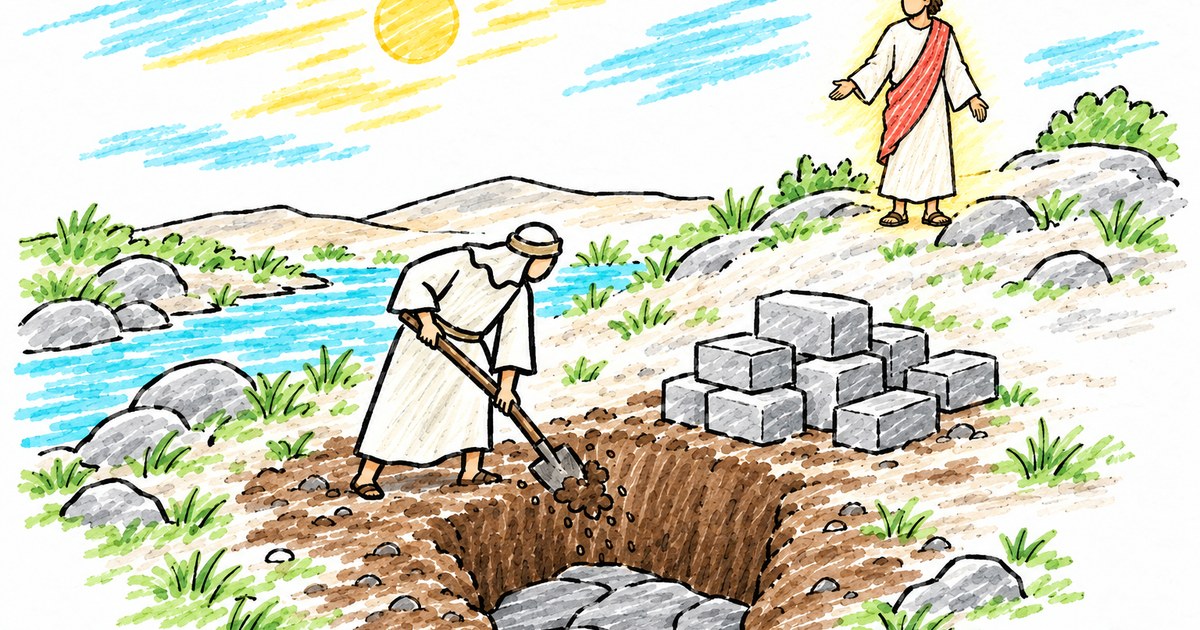
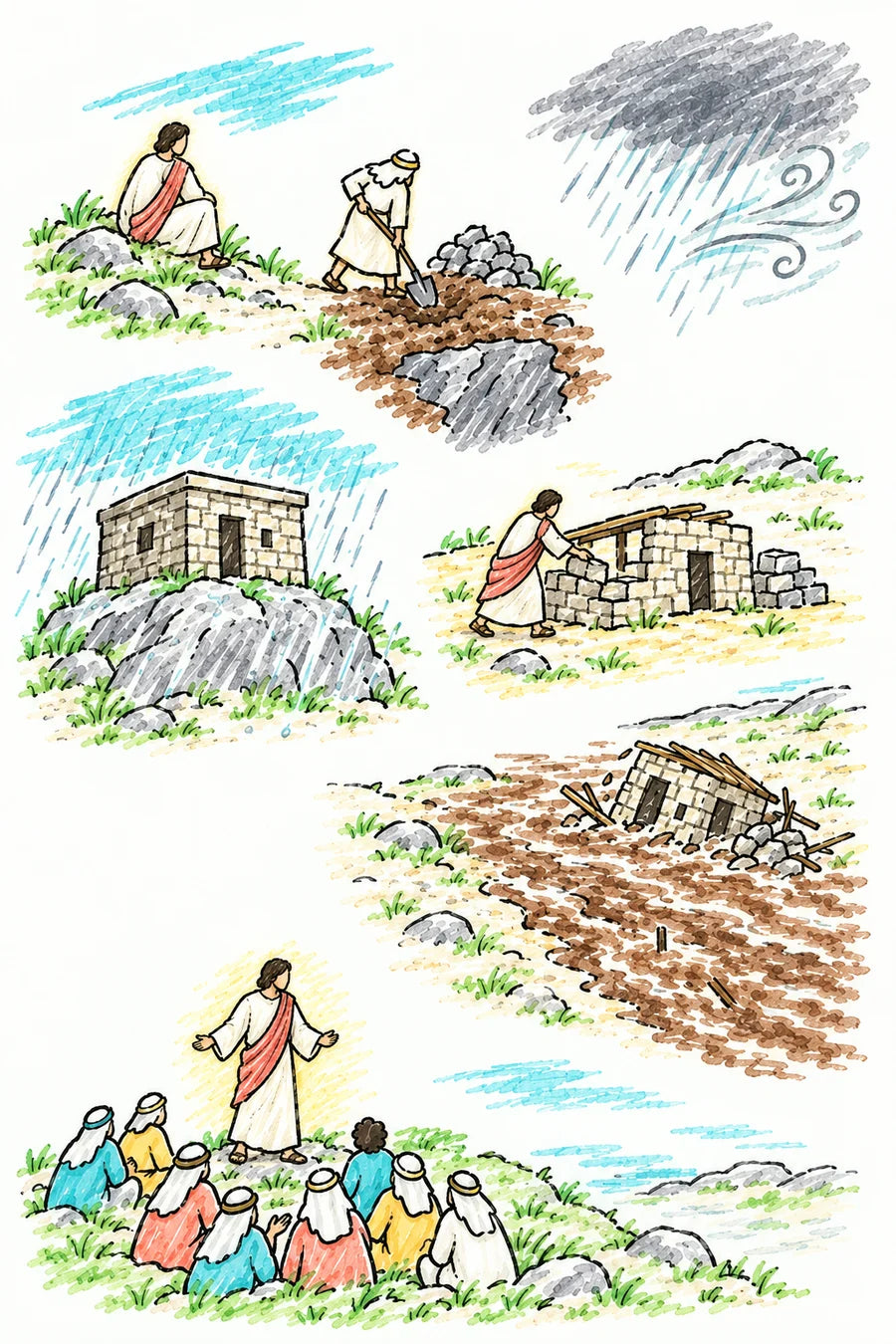
Jesus ended the Sermon on the Mount with a short parable, a story with a meaning underneath. A wise man heard His words and did them; he was like a builder who dug deep and set his house on solid rock. A foolish man heard the same words and did not do them; he was like a builder who put his house on sand.
The same storm hit both houses: rain, floods and wind. The house on the rock stood. The house on the sand fell, and “great was the fall of it.” The people were astonished, because Jesus taught with His own authority, not by quoting other teachers.
A hillside in Galilee; the parable pictures a rocky hill and a sandy streambed.
The Rock is the Savior Himself: “the rock of our Redeemer, who is Christ” (Helaman 5:12).
Read it yourself: Matthew 7:24–29
Part 1 of 7
Eight stops, from hearing His words to the astonished crowd. Scroll, or tap a number on the map.
Part 2 of 7
Four scenes: digging deep, building on sand, the storm and the morning after. Look for the Savior in each one.
Read it plainly
Tap any dotted word for its meaning. The scripture stays exactly as written.1
Part 3 of 7
This is a parable: a story with a meaning underneath. The Savior gave its meaning Himself, and the Book of Mormon names the Rock. Each card says where its insight comes from.
All nine. An ear, a shovel, the rock, the sand, rain, flood, wind, a house that stood, and a teacher with authority. Matthew 7:24–29
Part 4 of 7
People who hear this parable are in the storm, hearing but not doing, digging deep, or just starting to build. Which feels most like you right now?
A next step for you
Your choice is saved only on this device.
Try it
Both builders heard the same words. The difference was what they did next. Read each choice and decide: is this building on the rock, or on the sand?
“Whosoever heareth these sayings of mine, and doeth them.” Matthew 7:24
Part 5 of 7
A little background helps us see the parable the way the first listeners did. Outside sources are labeled.
The land has dry riverbeds called wadis, flat and sandy, that “can suddenly fill with rushing water when heavy winter rains in more elevated areas flow down.”9 Luke: “the stream beat vehemently upon that house.”2
The foolish choice looked sensible on a sunny day.
Elder Talmage: “in spite of rain and hurricane and flood, the house stood.”5
The difference was never the weather.
Elder Talmage: “His address was free from any array of rabbinical precedents.”5 Scribes taught by quoting earlier teachers. Jesus said, “I say unto you.”
He spoke as the Son of God.
Helaman named his sons Nephi and Lehi and taught them to “remember, remember that it is upon the rock of our Redeemer … that ye must build your foundation.”3
A father teaching the parable to his children.
Word study · Greek
phronimos φρόνιμος · “wise” (Matthew 7:24)
Word study · Greek
petra πέτρα · “rock” (Matthew 7:24–25)
What the text does not say
The parable doesn’t say the wise man’s house was spared the storm. “The rain descended, and the floods came, and the winds blew, and beat upon that house.”1 Building on the Rock doesn’t stop storms; it keeps us from falling.
Part 6 of 7
He is the One who tells the parable, and He is also the Rock.
Helaman: the rock of our Redeemer is “a sure foundation, a foundation whereon if men build they cannot fall.”
Helaman 5:123“If we build our foundation on Jesus Christ, we cannot fall!”
“Where our foundation is really matters, and this has a decisive effect on the outcome ultimately and eternally.”
“The gospel is not part of our life, but our life is actually part of the gospel of Jesus Christ.”
“The spirit of the address is throughout that of sincerity and action, as opposed to empty profession and neglect.”
Another Testament
“It is upon the rock of our Redeemer, who is Christ, the Son of God, that ye must build your foundation.” Helaman 5:12
Another Testament
The risen Savior, after the sacrament: “And if ye shall always do these things blessed are ye, for ye are built upon my rock.” 3 Nephi 18:12
Part 7 of 7
The Savior’s promise
“It fell not: for it was founded upon a rock.” Matthew 7:25
He is the Rock. Every time you hear His words and do them, you build on Him.3 What is one saying of His you will do this week?
One stone on the Rock a day. It saves on this device, one day at a time.
0 of 7 today
Seven stones laid. Come again tomorrow.
A quiet moment
“Remember, remember that it is upon the rock of our Redeemer … that ye must build your foundation.”
Read Helaman 5:12 slowly. Then ask Heavenly Father to show you one part of your life that needs to move onto the Rock. Helaman 5:12
A verse to hold
Talk about it
For adults and deeper study
Longer readings, harder questions, and where to study next. Each one says what it is before you click.
Helaman’s charge to his sons to build on “the rock of our Redeemer,” and the risen Savior linking the sacrament to being “built upon my rock.”4
Read Helaman 5 → Read 3 Nephi 18 →The children’s song about the wise man, the same rain on both houses, and why our whole lives should rest on the gospel.6
Read the talk →The close of the Sermon on the Mount: hearing versus doing, the two builders, and why the people were astonished at His authority.5
Read chapter 17 →Luke’s version adds digging deep, a foundation on the rock, and the stream beating “vehemently.”2
Read Luke 6 →Every quotation, gloss, and piece of background on this page is listed here: scripture first, then Church sources, then outside scholarship (labeled).
Quotations checked against the linked pages on October 7, 2026. Scripture is quoted from the King James Version as published in the Gospel Library.
Two builders heard the same words and faced the same storm. The one who did what He said was still standing. Build on the Rock: the Savior Himself. Matthew 7:25
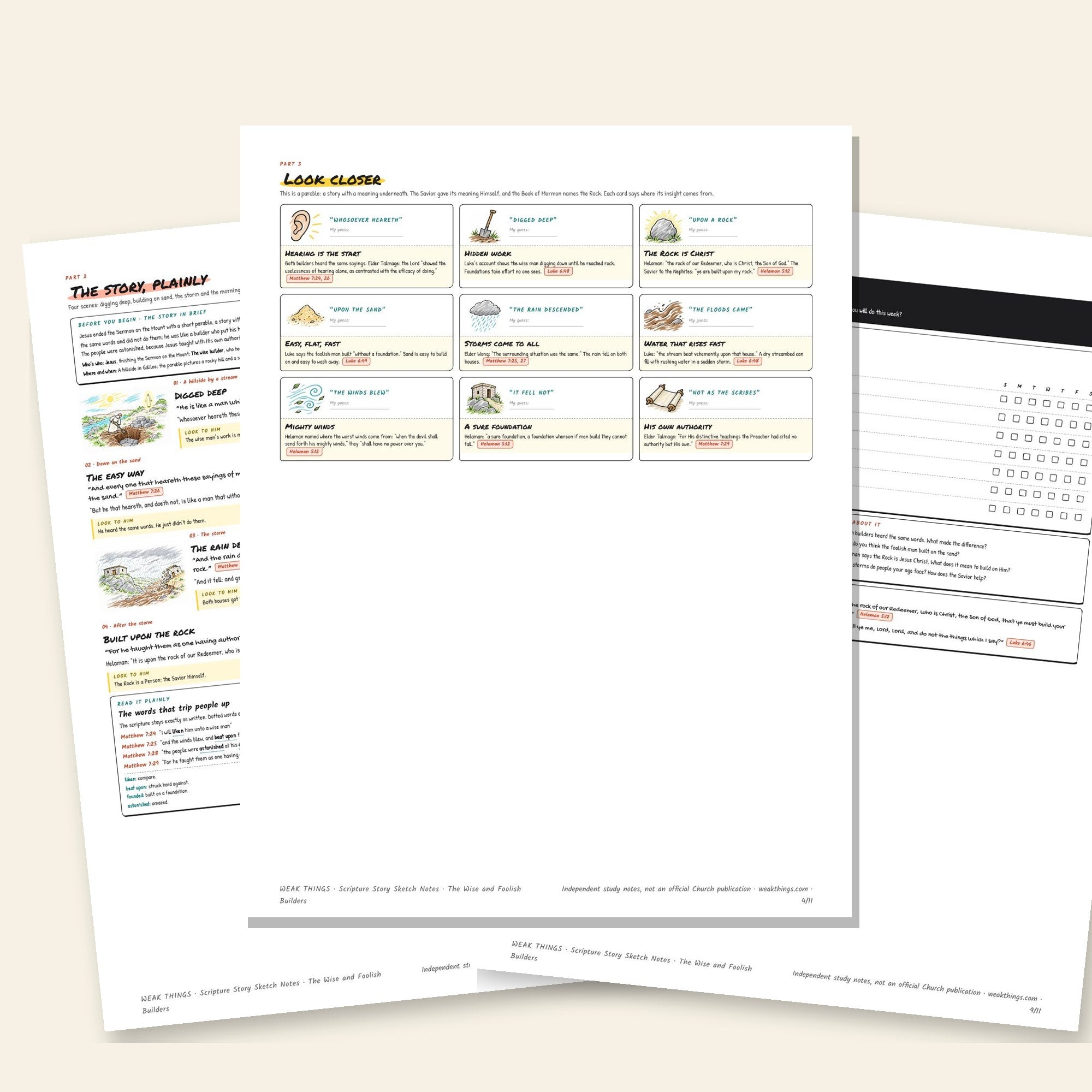
Printable sketch notes
Everything on this page as a 11-page letter-size PDF: the map, scenes, cards, activity, word studies, tracker, Go deeper and sources. For home, class or a quiet Sunday.
More stories
The Wise and Foolish Builders is part of the Scripture Story Sketch Notes for the New Testament, set alongside Come, Follow Me for February 15–21, 2027 (Matthew 6–7).
See every story See all 2027 weeksIndependent study notes from Weak Things, not an official publication of The Church of Jesus Christ of Latter-day Saints. Scripture quotations are from the King James Version. This is a parable; the Savior gave its meaning, and the insights in “Look closer” are labeled by source.